



 By Ravee Singh Ahluwalia
We humans are described as social animals, yet we have lost the echo of what it truly means to be social. We communicate more than ever but we connect less than ever. We choose our conversations, curate our circles and filter our interactions so much that they no longer reflect genuine human warmth. Our intellect, instead of opening us to others, often builds invisible walls of superiority and judgment.
Behind these walls sits the same egoistic self in all of us, quietly controlling our actions and reactions. The mind, restless and conditioned, pushes us towards comparison, competition, and constant self-importance. In this state, we grow insensitive to the fundamental truth of coexistence with animals, birds, trees, rivers, the sky above us and the people standing right next to us. We forget that we are not separate from nature, we are one strand in a much larger web.
Our ancient wisdom traditions spoke of five basic elements earth, water, fire, air and ether as the very foundations of existence. These were not just physical substances but living presences that nourished, protected and guided human life. As our intellectual capacity grew, we began to give them names, forms and identities, turning them into gods and deities. At first, this may have been an expression of reverence. But slowly, as we organised these elements into place of worship, rituals and categories, something subtle changed within us. Instead of feeling responsible for caring for these elemental forces, we started expecting them to take care of us. We placed the burden entirely on the “superpower” and forgot our own duty as co-creators and caretakers.
Like a pampered child who assumes that a loving parent will always clean up the mess, we slipped into entitlement. The five elements, in their infinite compassion, allowed us this freedom. They did not control or punish us, they simply let us go, trusting that one day we might find our way back. And in that freedom, we wandered far, very far from the original line of wisdom. Today, when we look around, we can see how far we have travelled from that line of origin. We exploit the earth that feeds us, carving and consuming without pause. We pollute the very air that keeps us alive, filling it with toxins and noise. We contaminate water, the sacred flow that sustains every cell in our body. We ignore ether the subtle, protective field of energy that holds and balances life by cluttering our inner and outer worlds with constant agitation.
We have become so busy demanding comfort that we have forgotten gratitude. So busy asserting our rights that we have neglected our responsibilities. In this restless rush, coexistence has turned into conflict between development and environment, between human needs and non-human lives, between short-term gain and long-term survival. Yet, the elements continue to give. The sun still rises, the rains still fall and seeds still sprout. The question is no longer whether nature will support us, but whether we will remember how to support nature.
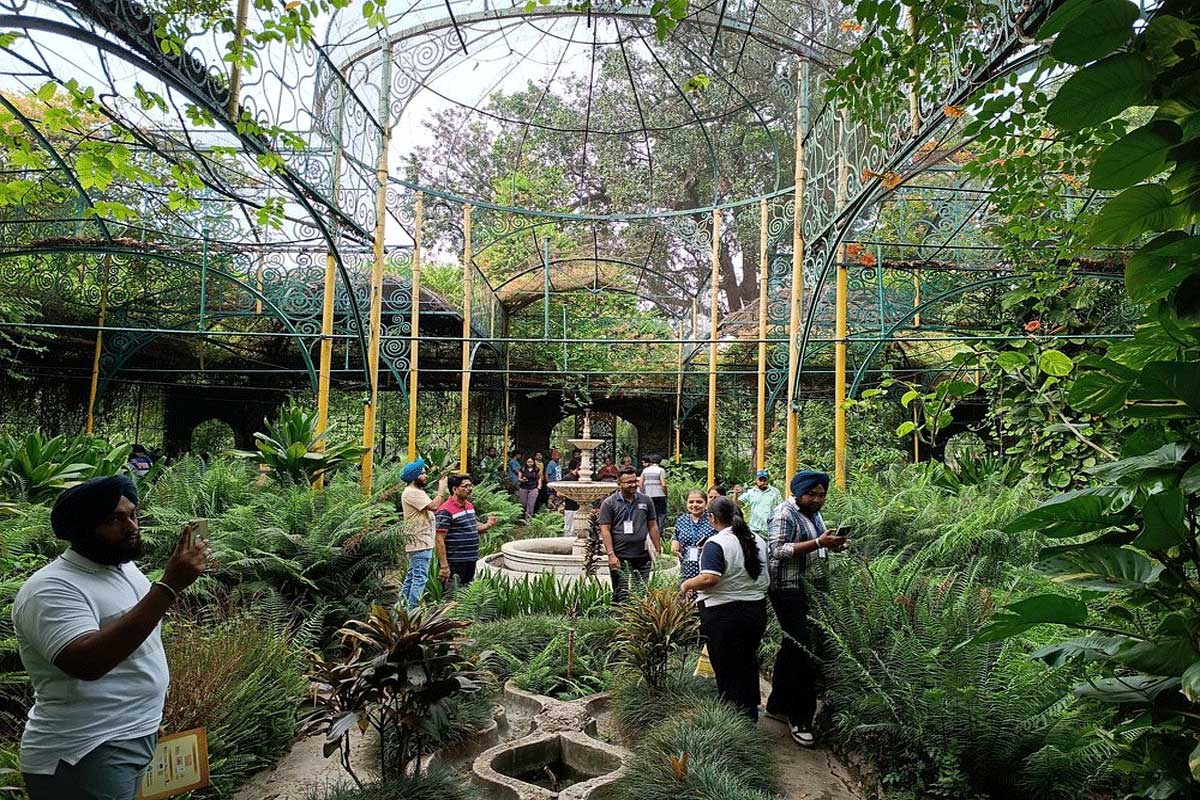
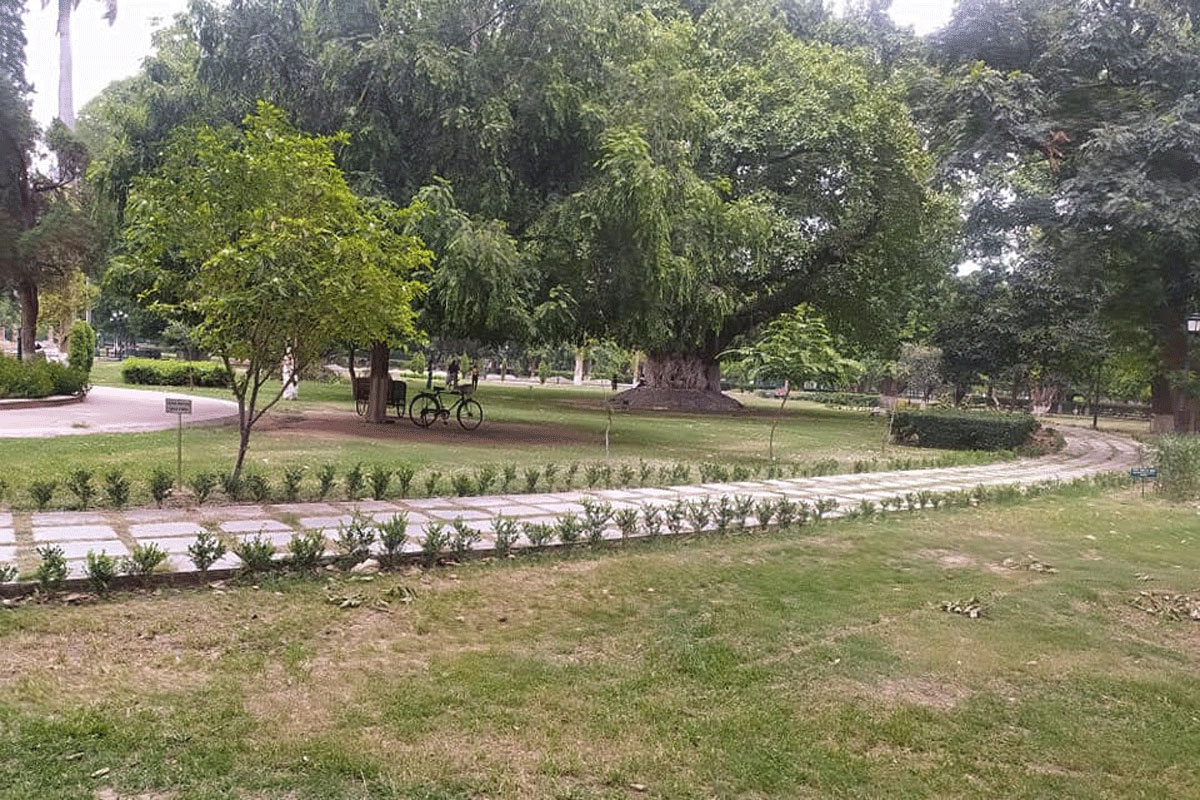 In this context, every sincere attempt to reconnect with nature becomes an act of remembering. When we conceptualised the Baradari Gardens Heritage Walk in Patiala, it was never meant to be just a leisurely stroll or a sightseeing activity. For some participants, it appears as a simple walk. For others, it becomes an eye-opener. For me, it is a coordinate, a doorway, to re-enter the circle of wisdom of those five elements. Baradari Gardens is not only a historic pleasure garden, it is a living classroom of earth, water, air, light and subtle energy. Its trees, pathways, old structures, birds and changing seasons together form a silent scripture.
Walking slowly through this space, feeling the ground under our feet, observing the play of light and shadow, listening to birds and leaves, we begin to sense what we have lost and what can still be restored. Each step in Baradari can become a small act of realignment with the line of origin. When we look at an old tree not as an object but as an elder, when we experience clean air in the garden as a blessing, not a default, when we pause to notice the quiet protection of this green oasis amidst urban chaos, something in us softens. We begin to see that coexistence is not a theory. It is a practice of walking gently, observing deeply, and relating respectfully.
The deeper purpose of the Baradari Gardens Heritage Walk is to help us move from merely visiting nature to belonging to it again. It invites us to move beyond the role of a tourist or consumer and step into the role of a participant and caretaker. When we walk consciously in Baradari Gardens, we are not just exploring a historical site, we are reconnecting with the five elements that first gave us life. Perhaps this is the real journey we now need, not just progress in technology or infrastructure, but progress in awareness. To return from ego to empathy, from exploitation to stewardship, from separation to shared existence.
The line of origin is not a point in history, it is a state of being where humanity and nature recognise each other as part of the same family. Baradari Gardens, in its quiet, green embrace, reminds us that this return is still possible. All we need to do is slow down, listen, and allow ourselves to come back into sync with the power of nature. When we do that, we do not just save the garden, we begin to save ourselves.
(The views expressed by the author are personal.)
About The Author
Ravee Singh Ahluwalia leads Patiala Foundation, an NGO from Punjab with Special Consultative Status under UN ECOSOC since 2018, focused on safer roads, greener environments, dignified livelihoods and the preservation of local heritage. As a social entrepreneur and community advocate, he collaborates with government, corporates and citizens to design practical, on-ground solutions for everyday civic challenges.