



New Delhi, March 7
Leader of the Opposition in the Lok Sabha, Rahul Gandhi, has said that India’s data is the most valuable in the world but the Modi government is handing it over to America through trade agreements. He emphasized that India must recognize its own strengths before engaging in global negotiations.
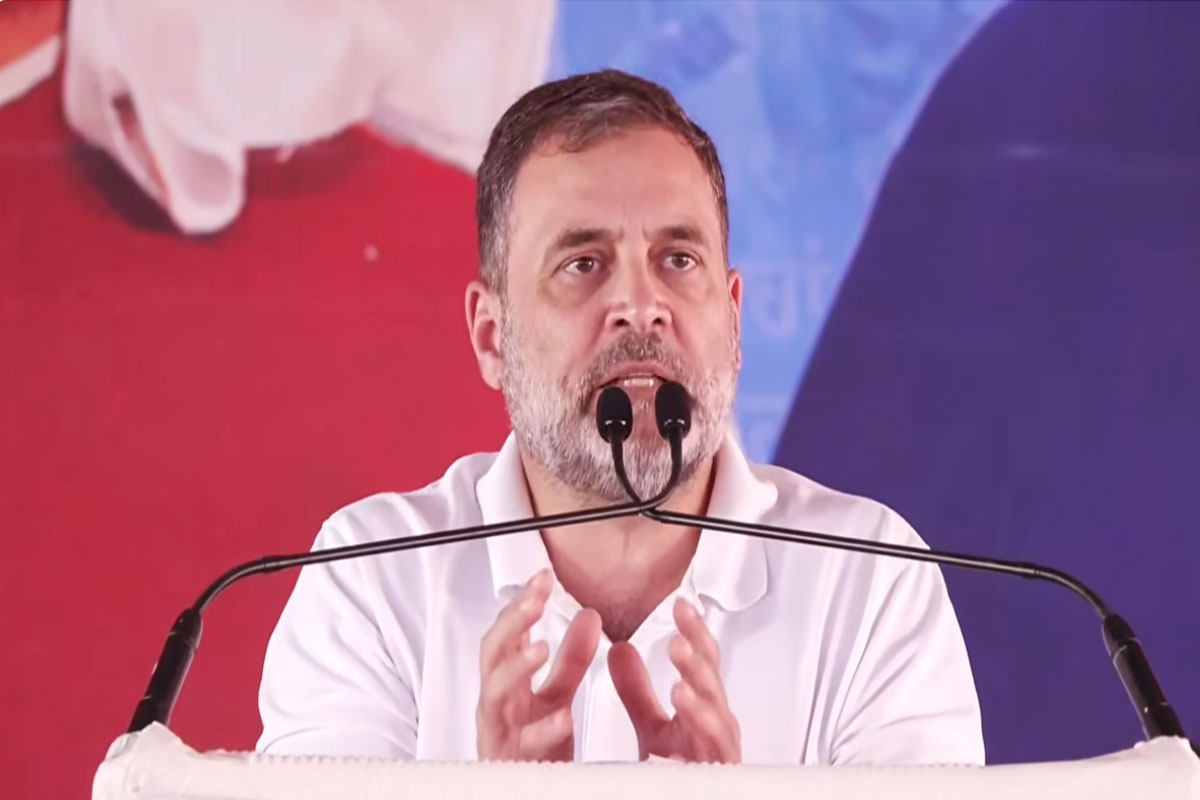
During an interaction with IT professionals and entrepreneurs at Technopark in Thiruvananthapuram, Kerala, Gandhi said that India has talented human resources, diversity, and strong engineering and medical capabilities. Based on these strengths, India can build a world-class production and industrial system while upholding democratic values, and with the right policies and foresight, it can compete with China.
Criticizing the current economic framework, Gandhi said that the country’s economy is increasingly concentrated in the hands of a few large business groups. According to him, big industrialists are mainly selling foreign products, which harms domestic manufacturing and local producers. He described the Goods and Services Tax (GST) as “anti-production,” saying it has hurt small and medium enterprises, which are considered the backbone of job creation. Gandhi argued that the current tax system disadvantages production-based states while relatively benefiting consumption-based states.
The Congress leader said that jobs do not disappear from the world but shift from one place to another. According to him, today’s competition among nations is about how they attract employment opportunities for their citizens, which requires better connectivity, infrastructure, and strong industrial policy.
Gandhi stressed that sustainable employment mainly comes from the production sector, not just consumption. While the IT sector creates opportunities, Gandhi said that for a large country like India, mass employment can only be generated through manufacturing industries. He pointed out that sectors such as automobiles, electronics, and shipbuilding have immense potential for job creation, though China currently dominates these industries.
Gandhi added that in the changing global landscape, countries must shape their policies based on new industrial trends. Gandhi explained that Britain once gained industrial power through steam engines and coal, and later the U.S. through petroleum. Today, global technological competition centers around electric motors, batteries, and optics—fields in which China is leading.
Gandhi warned that insufficient job creation could lead to social unrest and conflict. He said that employment generation must be the highest priority of any government to maintain social balance. He also criticized the double standards in economic policies, noting that aid to the poor is often dismissed as “freebies,” while concessions such as cheap land, tax breaks, and loan waivers given to big industrialists are labeled as “development.” He questioned why two different yardsticks are applied in the same country.
In response to a question during the interaction, Gandhi said that if he were not in politics, he would probably be working in the aerospace sector. He mentioned that he is a pilot like his father and uncle, and aviation has been part of his family tradition.