



Chandigarh, March 31
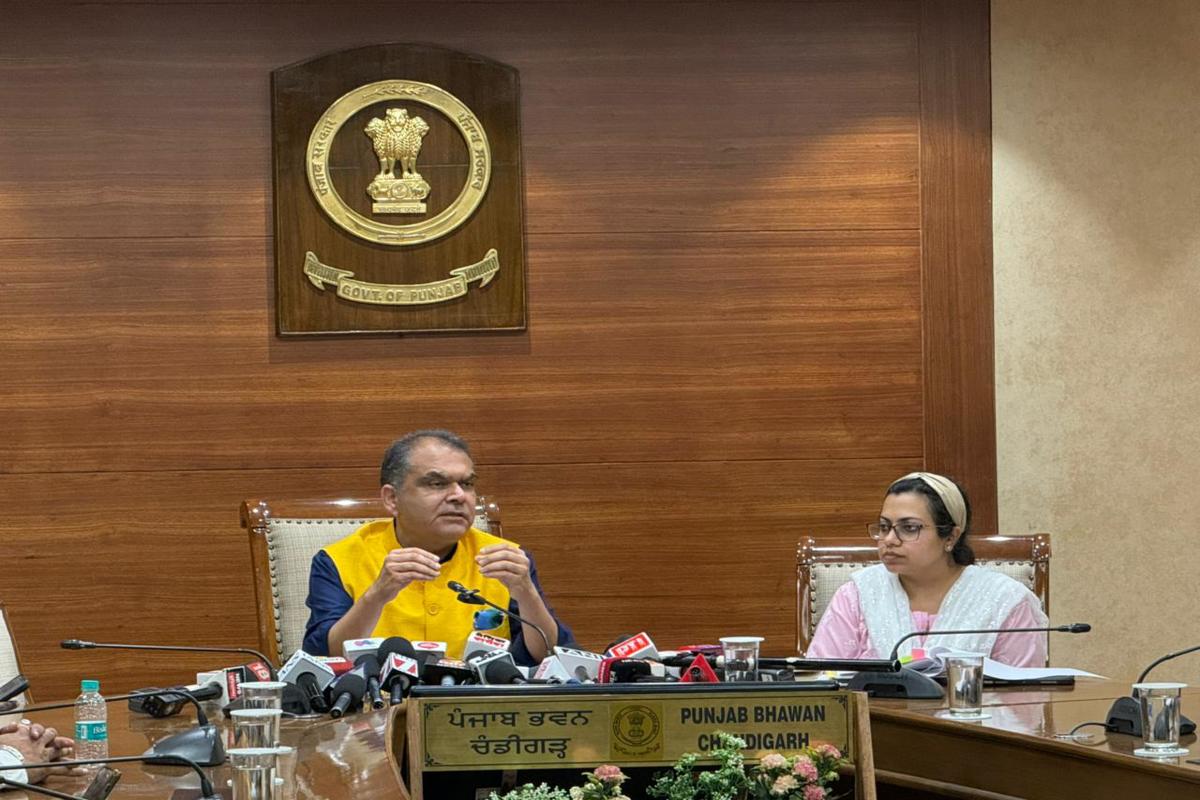
In a decisive step towards strengthening Punjab’s industrial ecosystem, the state government has approved sweeping reforms in the conversion of leasehold industrial plots to freehold and rationalisation of post-allotment services. Announcing the measures, Cabinet Minister for Industries & Commerce, Investment Promotion, Power and Local Government, Sanjeev Arora, said the reforms reaffirm the government’s commitment to ease of doing business and building a transparent, investor-centric environment.
The new policy fixes the conversion fee at just five percent and grants a complete exemption on stamp duty for conversions completed up to April 30, 2026. Annual renewal charges have been discontinued for several services, while a one-time fee structure replaces recurring charges in select cases. To clear legacy issues, pending transfer and conversion cases will be disposed of in a time-bound manner, with simplified documentation requirements such as acceptance of a bank letter in case of mortgaged lease deeds. Crucially, no unearned increase will be charged where the clause is absent in title documents, in family transfers, inheritance, or cases of death, and for plots already converted to freehold prior to notification. This, Arora emphasised, provides long-awaited clarity and shields industrialists from unjustified financial liability.
The Punjab Small Industries & Export Corporation (PSIEC) has also introduced major ease of doing business reforms. Eighteen services have been shifted from mandatory to optional, notarised affidavits replaced with self-declarations, and powers delegated to Estate Officers to ensure faster approvals. These changes, the minister said, significantly reduce compliance burden and make freehold conversion highly advantageous for industry.
Equally transformative is the Cabinet’s approval of the Punjab Common Infrastructure (Regulation & Maintenance) Amendment Bill, 2026. The amendment establishes a uniform mechanism for operation and maintenance across industrial focal points, estates, and clusters, including those outside notified parks. Service charges will subsume property tax in municipal areas, eliminating double taxation and simplifying compliance. In a first-of-its-kind move, service charges will be collected through electricity bills by the Punjab State Power Corporation Limited, ensuring transparency and improved compliance.
The bill also empowers industry-led governance through Special Purpose Vehicles registered under the Societies Registration Act, 1860. Each SPV will be managed by a seven-member elected executive committee of industrial allottees, supported by government officials for coordination and oversight. Ninety percent of funds will be allocated to SPVs for maintenance, with ten percent reserved for infrastructure upgrades. A mandatory corpus fund will secure future development, while strict caps on administrative expenses will ensure efficient utilisation. The government retains powers to audit, supervise, and supersede non-performing SPVs if required.
“These landmark reforms reflect our Government’s clear vision — to empower industry, reduce compliance burden, and create a modern, transparent, and self-sustaining industrial ecosystem. Punjab is committed to providing the most competitive and investor-friendly environment in the country,” said Arora.
With massive financial relief, simplified conversion processes, reduced compliance, faster approvals, and industry-led infrastructure management, Punjab has signalled a strong push towards ease of doing business. The message is clear: Punjab means business.