




New Delhi, December 3
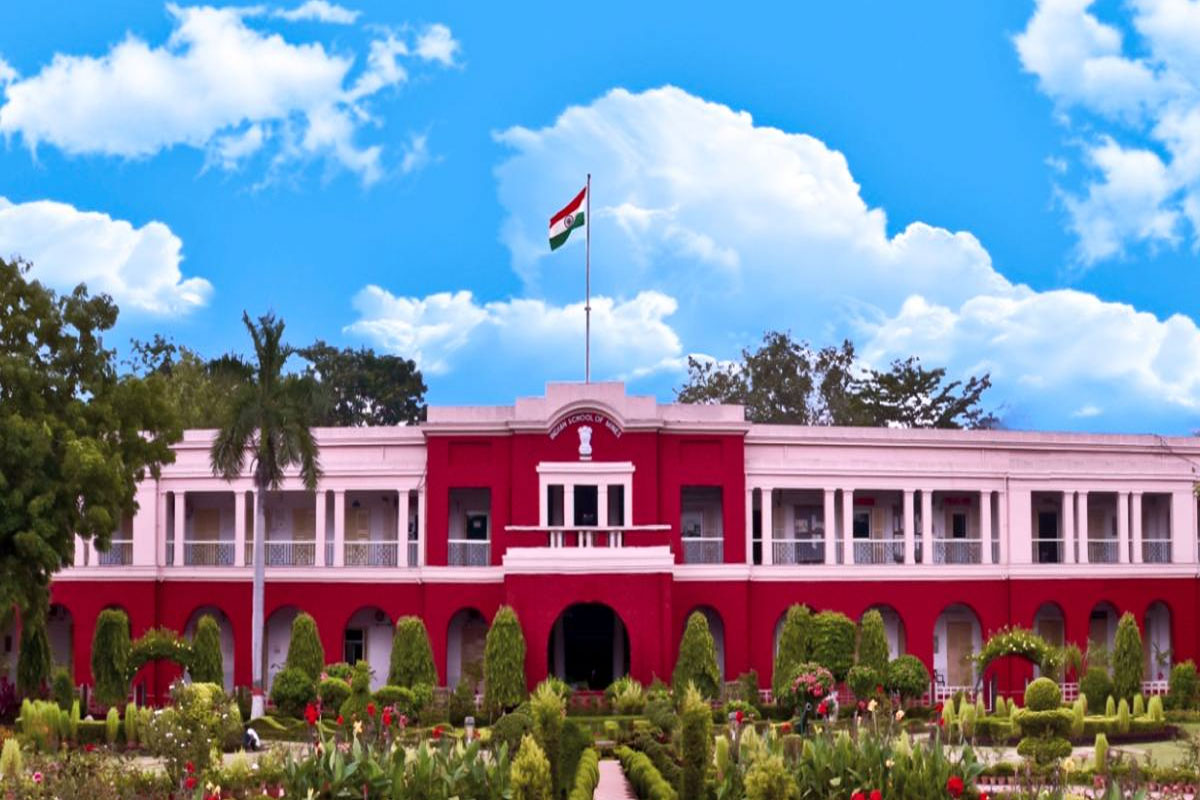
Dr P.K. Mishra, Principal Secretary to the Prime Minister, delivered the inaugural address at the Centenary Foundation Week of the Indian Institute of Technology (Indian School of Mines), Dhanbad today. Speaking to faculty, students, alumni, and distinguished guests, Dr Mishra underscored the pivotal role of IIT Dhanbad in India’s journey towards becoming a Viksit Bharat by 2047.
Dr. Mishra was conferred Doctor of Science earlier this year by IIT (ISM) Dhanbad. Expressing delight at joining the celebrations of the institute’s 100-year legacy, noting its immense contributions to mining, energy, earth sciences, and applied engineering, Dr Mishra recalled that IIT Dhanbad has been a pioneer in mining education in Asia and has consistently provided expertise to national institutions such as Coal India, ONGC, GSI, CMPDI, and NTPC. Its research outcomes, he said, have shaped national standards in mine safety, coal exploration, oil and gas, and mineral beneficiation. “A centenary is not merely a milestone, but a reminder of what sustained commitment can achieve when knowledge is used as a public good for positive social outcomes,” Dr Mishra remarked. He urged the institute to reflect on its role in advancing India’s long-term vision of becoming a developed nation.
Highlighting the Prime Minister’s vision for India 2047, Shri Mishra said the goal is to achieve the status of a developed country while balancing nature and culture and leading globally in science and technology. He emphasized that India will be atmanirbhar across all sectors, women will lead the development story, the economy will be inclusive and innovative, and corruption, casteism, and communalism will have no place in national life.
Reflecting on India’s economic trajectory over the past 11 years, the Principal Secretary to the Prime Minister described the Prime Minister’s approach as rooted in innovation and reinvention. He outlined four pillars of this approach: promoting competitiveness, leveraging technology, meeting global challenges, and ensuring last-mile delivery. He acknowledged the turbulence in the global economy caused by the pandemic, trade wars, geopolitical tensions, climate change, and supply chain disruptions. Yet, he noted India’s resilience, citing robust GDP growth of 8.2 percent in the second quarter of the current financial year. “Even amidst uncertainty, India is moving ahead with courage and confidence in the Amrit Kaal,” he said.
Dr Mishra emphasized the transformative role of technology in shaping the future. From smartphones and big data to robotics and artificial intelligence, he noted that disruption is everywhere. India, he said, has emerged as a global innovation powerhouse with over 100 unicorns and more than two lakh startups, making it the third-largest startup ecosystem in the world. He highlighted government initiatives to bridge innovation gaps, including the Rs 1 lakh crore Anusandhan National Research Fund for basic research and prototypes, the IndiaAI Mission to build leadership in artificial intelligence, and a dedicated Deep Tech Fund of Funds to support transformative startups. “These are important first steps in building a future-ready innovation ecosystem,” he added.
Elaborating on the Prime Minister’s “4S” mantra – Scope, Scale, Speed, and Skill – as the guiding principle of governance, Dr Mishra cited flagship initiatives such as Ayushman Bharat, Digital India, UPI, and Mission Karmayogi as examples of how technology and values are enabling inclusive, citizen-centric service delivery. Platforms like Aadhaar, CoWIN, and the National Digital Education Architecture, he said, demonstrate how efficiency can coexist with inclusion. “It is natural that many nations, especially across the Global South, now look to India as a Vishwa Bandhu – a trusted partner blending modern capability with civilizational wisdom,” Dr Mishra observed. He also pointed to advances in frontier sectors such as the National Quantum Mission, space achievements like Chandrayaan-3 and Aditya-L1, renewable energy capacity crossing 200 GW alongside the National Green Hydrogen Mission, and the Deep Ocean Mission developing indigenous submersibles for scientific exploration.