




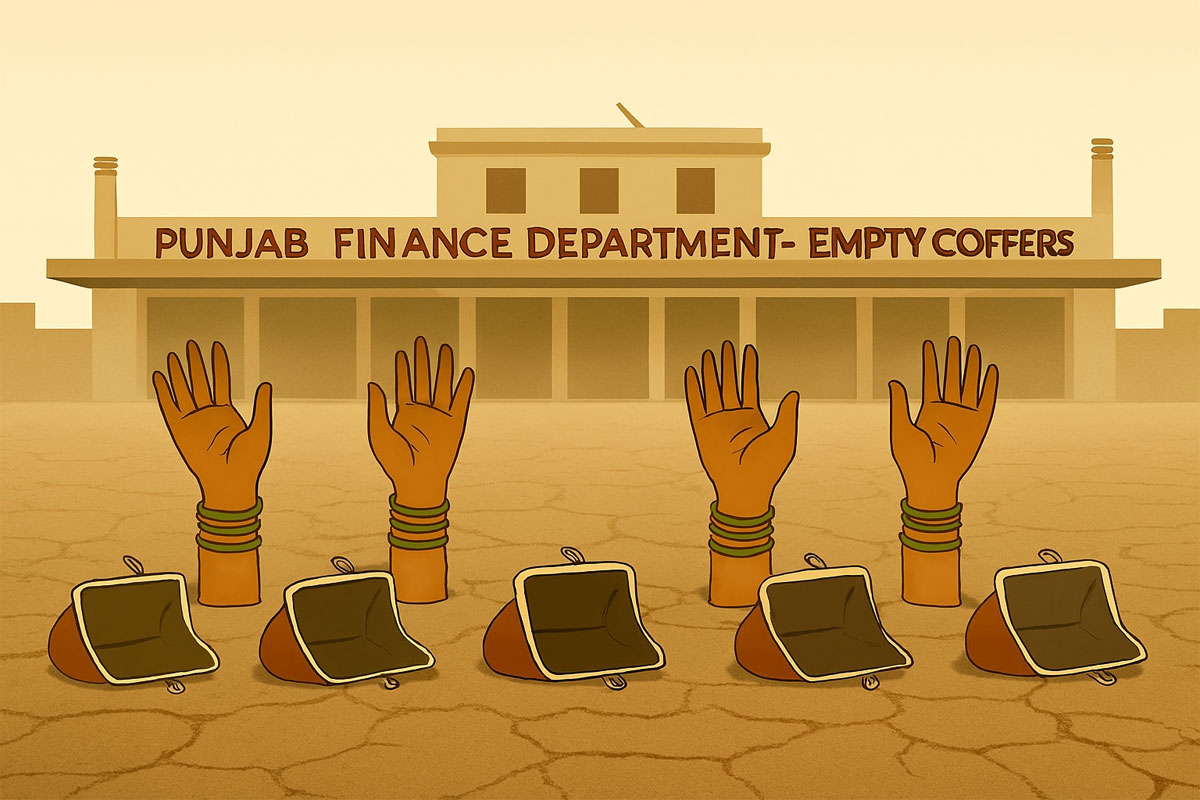
When the Aam Aadmi Party (AAP) swept to power in Punjab in 2022, one of its most prominent pre-poll promises was a monthly allowance of ₹1,000 for every woman above the age of 18. The announcement had generated immense enthusiasm among women voters, who saw it as a step toward financial empowerment and recognition of their contribution to society. However, four years have passed since the party formed government but the promise remains unfulfilled, leading to growing resentment among women across the state.
According to official figures, nearly 1.31 crore women in Punjab are eligible for this scheme. If implemented, the financial burden on the state exchequer would amount to approximately ₹15,600 crore annually. With Punjab already grappling with empty coffers and mounting debt, the government has nevertheless continued to maintain that it will fulfill its promise. At no point did the AAP leadership cite financial constraints as the reason for the delay. Yet, for many women, this repeated assurance rings hollow, as they argue that the promise was made with full knowledge of the state’s financial condition and should have been implemented from the very beginning.
The issue resurfaced recently when Chief Minister Bhagwant Mann, while addressing a political conference at Maghi in Sri Muktsar Sahib, reiterated that the government would fulfill its commitment in the upcoming budget. While the statement offered a glimmer of hope, it did little to quell the simmering anger among women. Their central question remains: what about the arrears of the past four years? If the government was sincere about women’s welfare, they argue, it should compensate them for the period since the day AAP assumed power in Punjab, when the promise was first expected to be implemented.
The unfulfilled promise has tangible consequences. For many women, especially in rural areas, ₹1000 a month could have meant greater autonomy—money for personal needs, education or healthcare without dependence on male family members. In urban households, it could have provided relief against inflation. The absence of this support perpetuates the cycle of economic dependence and undermines the credibility of political assurances.
Moreover, the psychological impact is significant. Women who felt acknowledged and valued by the promise now feel sidelined. The gap between expectation and reality breeds disillusionment, not just with the ruling party but with politics itself.
Opposition parties have seized upon this discontent to mount a scathing attack on the ruling dispensation. The Shiromani Akali Dal (SAD), Bharatiya Janata Party (BJP) and Congress have repeatedly condemned the government for what they describe as a “cruel joke” played on the women of Punjab. Protest dharnas have been staged across the state, with opposition leaders accusing AAP of betraying the trust of women voters who had placed their faith in the party’s assurances.
As Punjab heads toward assembly elections in early 2027, the timing of the government’s renewed commitment has raised eyebrows. Many women believe that the announcement is politically motivated, aimed at reaping electoral dividends rather than genuinely addressing their concerns. The perception that the government is attempting to use the budget as a tool for political gain has further eroded trust among women voters.
The demand for arrears has now become a rallying point. Women across Punjab insist that if the government is truly committed to their welfare, it must not only implement the scheme going forward but also pay them the promised allowance retrospectively from the time AAP assumed office. Anything less, they argue, would amount to a betrayal of their trust and a disregard for the sacrifices they have made in supporting the state’s economy and society.
The coming months will be significant for the AAP government as it prepares the state budget. On one hand, it must contend with Punjab’s fragile financial situation; on the other, it faces mounting pressure from women who feel let down by an unfulfilled promise. How the government balances these competing demands will be closely watched. Even if the scheme is finally introduced, questions around arrears and the sincerity of its timing are likely to remain. For many women, the issue is not just about financial support but about trust and accountability. The government’s actions in the near future will therefore shape public perception of its commitment to welfare and governance, regardless of the political calculations that may accompany them.
(The author is a budding journalist. Views expressed are personal.)