



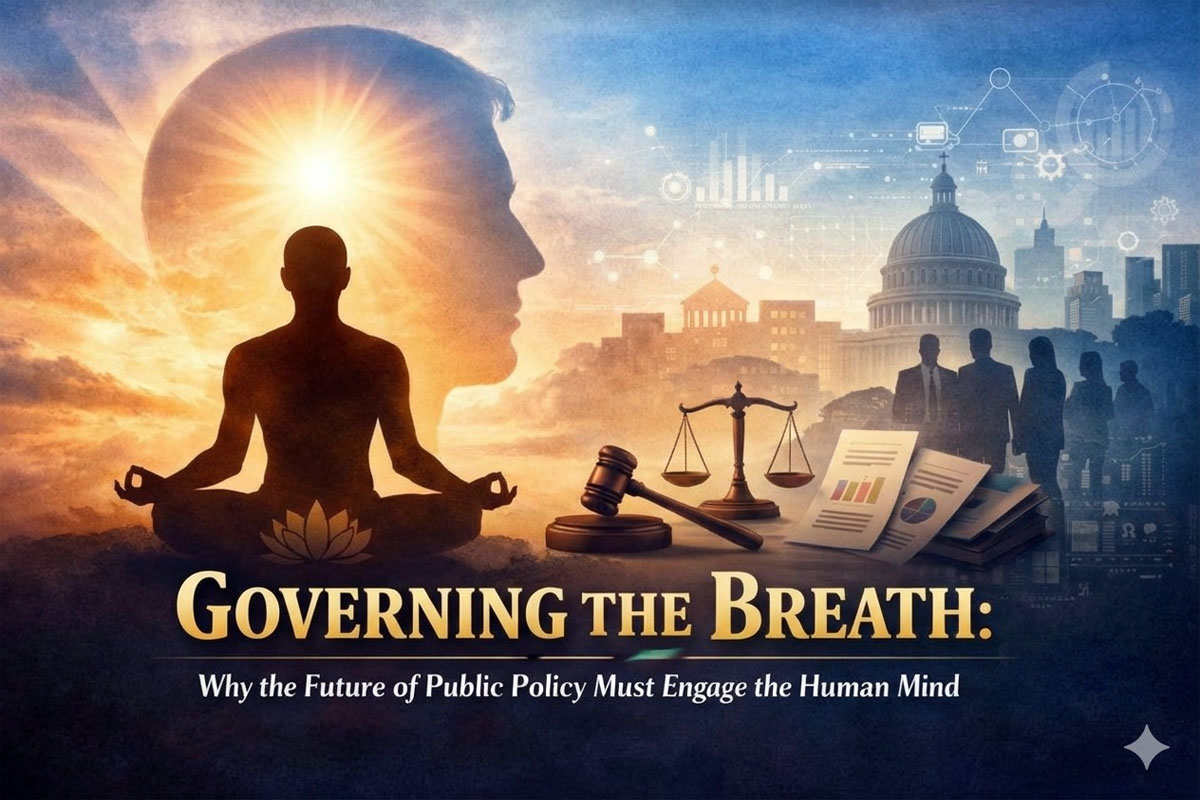
 In public life, we often speak of governance as the art of managing systems—laws, budgets, institutions and incentives. Yet beneath every system lies a far more unpredictable variable: the human mind. Policy ultimately succeeds or fails not because of its design alone, but because of how individuals think, feel, react, resist, or comply. In that sense, governance is not merely administrative; it is behavioural.
My work as a spiritual practitioner engaged with social reform—particularly in prisons, de-addiction spaces, and mass behavioural change – has repeatedly brought me to a simple but uncomfortable insight: punishment does not reform behaviour, and policy does not transform consciousness. Without inner discipline, emotional regulation, and self-awareness, even the most progressive laws struggle to produce lasting change.
This is where meditation, pranayama, and yoga enter public life; not as spiritual ornamentation, but as practical technologies of the mind.
Beyond Spirituality: Training The Inner Instrument
Dhyān often termed as Meditation is often misunderstood as a retreat from the world. In reality, it is training for engagement with it. At its core, Dhyān develops attention regulation, emotional stability, impulse control, and self-observation. These are not metaphysical ideas; they are behavioural capacities.
In environments such as prisons or de-addiction centres, one witnesses how unchecked impulses; not ideology – drive most destructive actions. Anger arises faster than thought. Craving overrides reason. Fear triggers violence. Traditional correctional approaches rely heavily on surveillance and punishment, assuming fear will produce discipline. Experience suggests otherwise. Fear may suppress behaviour temporarily, but it rarely reforms it.
Inner Discipline Cannot Be Imposed Externally. It Must Be Cultivated
The Meditation provides a structured method for this cultivation. By learning to observe one’s thoughts rather than obey them, individuals slowly regain agency over reflexive behaviour. This shift—from compulsion to choice—is the foundation of reform, whether personal or societal.
Breath, The Nervous System, And Impulse
Pranayama, or regulated breathing, is not symbolic spirituality. It is neurophysiology. Modern science increasingly recognises what India’s civilisational knowledge articulated millennia ago: the breath is the remote control of the nervous system. Slow, rhythmic breathing activates the parasympathetic response, reducing cortisol, stabilising heart rate, and calming the amygdala—the brain’s fear centre. Rapid, irregular breathing does the opposite.
Addiction, aggression, and impulsive behaviour are deeply tied to nervous-system dysregulation. When the body is constantly in fight-or-flight mode, rational decision-making collapses. One cannot counsel a nervous system into calmness; it must be trained there. In de-addiction work, breath regulation often becomes the first doorway to recovery. Before morality, before motivation, before counselling—comes physiological stability. Once the breath steadies, cravings loosen their grip. The mind regains pause. That pause is where reform begins.
Why Policy Fails Without Inner Transformation
Public policy often assumes rational actors. Real life rarely obliges. We legislate against substance abuse, domestic violence, reckless driving and corruption. Yet the same patterns recur. This is not merely an enforcement problem; it is a behavioural one. When stress, rage, loneliness, or despair dominates inner life, external rules lose authority.
Policy Without Inner Capacity Is Like Software Without Hardware
This does not imply abandoning law or accountability. It means recognising their limits. Structural reform must be complemented by psychological and emotional reform. Meditation functions precisely in this gap—where policy cannot reach but behaviour is shaped.
Meditation As Public Health Infrastructure
One of the least discussed aspects of meditation is its economic logic. Unlike hospitals, prisons, or rehabilitation centres, meditation requires minimal physical infrastructure. It is low-cost, non-invasive, scalable, and preventive. It does not treat disease after onset; it strengthens resilience before breakdown.
Urban India today faces a silent epidemic: anxiety, addiction, rage, loneliness, and burnout. These manifest as lifestyle diseases, domestic conflict, road violence, substance dependence, and declining mental health. The cost to productivity and public health is immense. Meditation and yoga cannot replace medicine—but they can significantly reduce the burden on it. When practiced consistently, they lower stress-related illness, improve sleep, enhance emotional regulation, and support recovery. Integrating such practices into public systems; schools, prisons, rehabilitation programmes, and community health frameworks; is not spiritual indulgence. It is preventive governance.
Integration, Not Opposition, To Medicine
A false binary often clouds this conversation: that embracing meditation means rejecting modern medicine. This is neither accurate nor responsible. Medicine addresses pathology. Meditation addresses patterns. One treats disease; the other trains awareness. The future of public health lies not in choosing between the two, but in integrating them. Just as physiotherapy complements surgery, mental discipline complements pharmacology. In de-addiction work especially, medication may stabilise withdrawal, but without inner training relapse remains likely. Meditation does not replace treatment; it strengthens the individual’s capacity to sustain it.
The Irony of Imported Wisdom
There is an additional irony worth acknowledging. Over the last few decades, Indian contemplative practices were stripped of context, renamed “mindfulness,” clinically packaged, and marketed globally. They returned to us via corporate workshops, productivity apps, and foreign accreditation; often disconnected from their ethical and philosophical roots.
India Now Imports its Own Civilisational Knowledge Back as a Trend
The issue is not the global spread of these practices; that is welcome. The issue is our hesitation to institutionalise them ourselves. While other nations integrate mindfulness into education, rehabilitation, and military training, India often debates whether yoga belongs in public systems at all.
Civilisations that abandon their own knowledge systems eventually rent them back at a premium. Institutionalising meditation is not about cultural pride; it is about intellectual confidence. A society that has refined mind sciences for centuries need not apologise for applying them rationally in governance.
A Civilisational Proposition, Not Religious Imposition
It is important to state clearly: meditation and yoga are not religious enforcement. They are experiential disciplines. Breath does not belong to a faith. Awareness does not require belief. While these practices emerged from India’s spiritual traditions; deeply rooted in the idea of Dharma as inner order—their application in public life can remain entirely voluntary and inclusive.
Civilisation Offers Tools; The State Decides How Wisely To Use Them
The deeper religious proposition embedded here is subtle: that outer order cannot exist without inner order. No amount of surveillance can substitute self-restraint. No system can replace conscience. This insight is spiritual in origin, but practical in application.
Governing The Mind
If governance is the management of human behaviour, then ignoring the mind is a policy blind spot.
We regulate markets, traffic, pollution and speech. Yet we leave emotions; “anger, greed, craving, fear” largely unaddressed, even though they drive most social dysfunction. Meditation does not make people passive. It makes them responsible. A regulated mind is not submissive; it is discerning. Such citizens are harder to manipulate, less reactive to provocation, and more capable of democratic maturity. In an era of polarisation and perpetual outrage, this may be its greatest public value.
Conclusion
India stands at a crossroads where economic ambition, demographic pressure and psychological stress intersect. The question before us is not whether meditation belongs in public life but whether governance can afford to ignore the mind any longer.
Inner Reform Is Not A Retreat From Policy—It Is Its Foundation
To govern the nation without governing the breath is to manage symptoms while neglecting causes. The future of public leadership may well depend not only on sharper laws or larger budgets, but on calmer minds, steadier nerves and citizens trained—quite literally—to pause before they react. In that pause lies responsibility. In that breath lies governance.
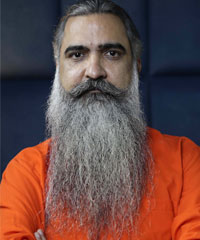
(The author is a revered Samnyasi and devoted disciple of His Holiness Shri Ashutosh Maharaj. Views expressed are personal.)