



Chandigarh, November 11
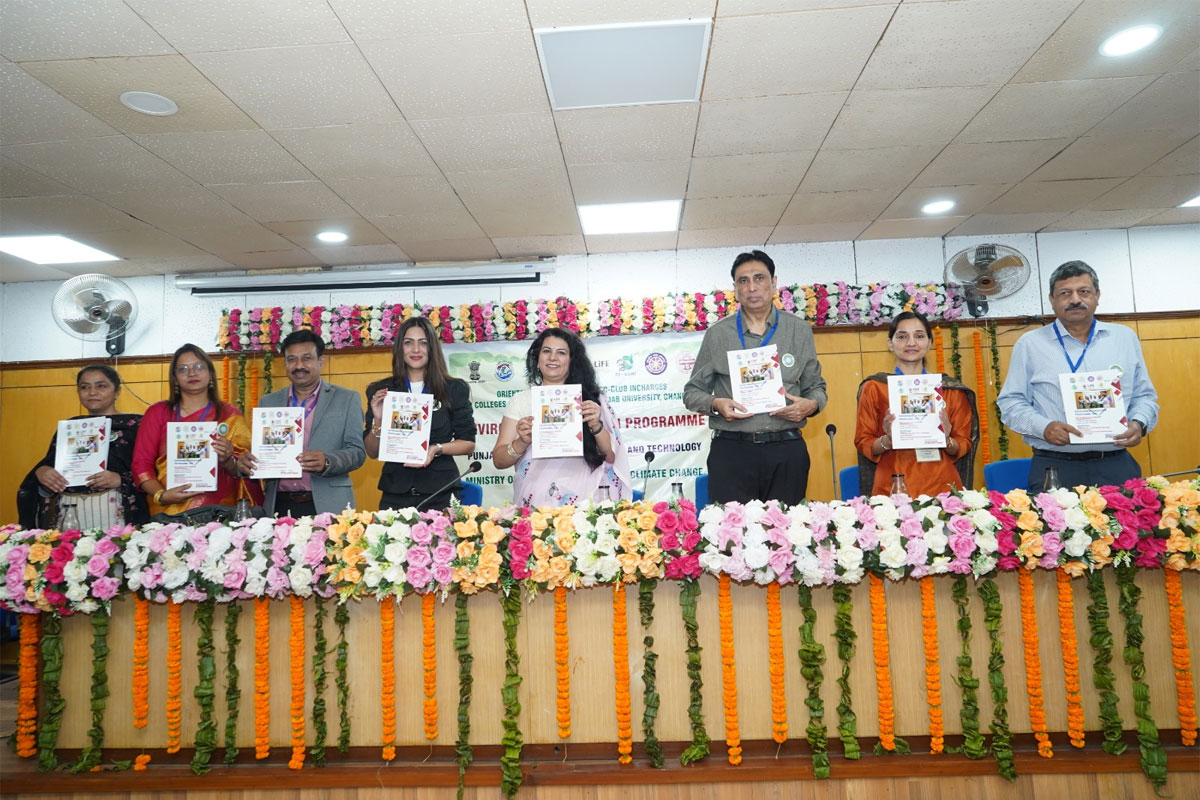
Panjab University, Chandigarh, hosted an Orientation Workshop for Eco-Club Incharges of Punjab colleges affiliated to Panjab University under the Environment Education Programme (EEP–2025). The day-long workshop, supported by the Punjab State Council for Science and Technology (PSCST) and the Ministry of Environment, Forest and Climate Change, Government of India, focused on strengthening environmental education and promoting sustainable practices through college-level Eco-Clubs. It was organised by the PU NSS under the guidance of EEP Coordinators, Prof. Rajat Sandhir, Dr Parveen Goyal, and Dr Sonia Sharma, to orient college-level Eco-Club incharges towards effective planning, reporting, and implementation of environmental initiatives across educational institutions.
The programme opened with an exhibition on “Best Out of Waste” and “Skill-Based Items,” followed by the symbolic watering of a plant, reaffirming PU’s commitment to ecological stewardship. Sessions throughout the day featured interactive discussions, presentations, and experience-sharing on sustainability initiatives.
Dr Parveen Goyal, EEP Coordinator, welcomed participants and introduced the Environment Education Programme, emphasising the importance of integrating environmental responsibility into institutional culture. Prof. Rajat Sandhir, Coordinator, EEP, addressed the gathering and later released the EEP Report 2024–25, outlining the programme’s impact and future roadmap. Dr K.S. Bath, Joint Director, PSCST, delivered an address highlighting the State’s ongoing environmental initiatives and collaborative efforts with higher education institutions.
Actor and environmental advocate Jonita Doda shared insights on sustainable living and cultural responsibility, inspiring participants to combine traditional values with modern environmental action. Participants also took the Mission LiFE Pledge, reaffirming their commitment to eco-conscious living.
Dr Reena Chadha, General Manager, IPCA, delivered a technical session on “Trash to Transformation: Reducing Carbon Footprint through Plastic & Solid Waste Management,” offering practical approaches to waste reduction. Dr Mandakini Thakur, Project Scientist, PSCST, explained the Environment Education Programme Portal and App for reporting Eco-Club activities, while Dr Sonia Sharma, EEP Coordinator, Panjab University, led an engaging session on Eco-Journeys and Practical Experiences.
The workshop included addresses from key representatives of PSCST, highlighting the State’s environmental initiatives under the EEP framework. Expert sessions covered practical themes such as solid waste management, carbon footprint reduction, and digital reporting of Eco-Club activities through the EEP Portal and App. Participants also undertook the Mission LiFE Pledge, underscoring their collective resolve toward eco-friendly action.
An open discussion encouraged sharing of challenges and success stories from colleges implementing Eco-Clubs, fostering collaboration and innovation in environmental education.
The Valedictory Session, graced by Pritpal Singh, Executive Director, PSCST, concluded the event with the distribution of certificates and awards to participants. The day ended with a Vote of Thanks by Prof. Rajat Sandhir, marking the culmination of an enriching workshop dedicated to empowering educators and promoting youth-led environmental change.