



Chandigarh, December 21
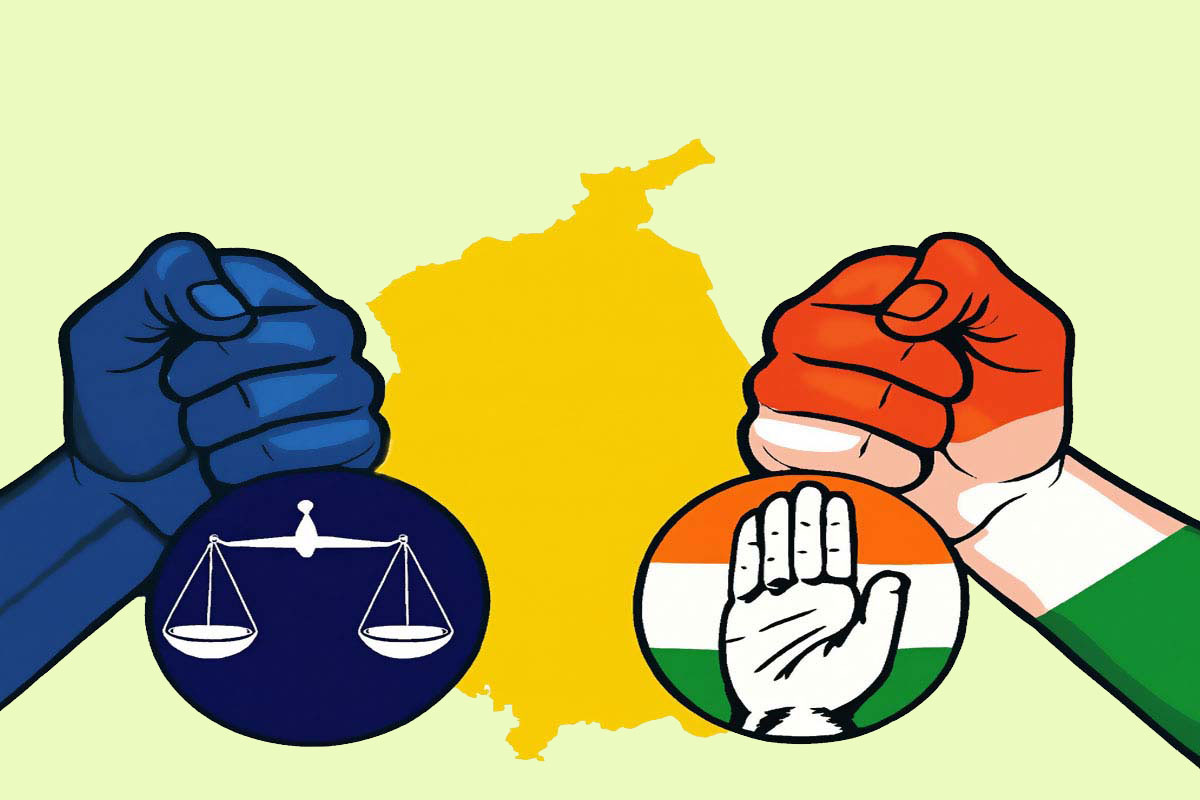
Ruling Aam Aadmi Party, the principal opposition party the Congress and the Shiromani Akali Dal have interpreted the recently concluded rural elections held for Zila Parishads and Block Samitis in their own way. While the AAP has been basking under the success, the opposition has been accusing it of “basking under a stolen glory”.
On the face of it, the ruling party has managed to retain the hold on the rural electorate. At least the elections have indicated that. But the victory in these elections does not necessarily guarantee the victory in the assembly elections.
Previous results are an example. During the previous rural elections, the Congress which was ruling in the state at that time achieved much more phenomenal success and that of the AAP was much more dismal. Yet the AAP ended up sweeping the assembly elections and the Congress lost badly.
With little over a year left for the Punjab Legislative Assembly elections, the results of the Zila Parishad and the Block Samiti elections were keenly watched. These elections certainly are not like the quarter or semi-finals in the sporting terminology, but these are definitely like the rehearsal before the final showdown.
It goes without saying that such elections like the local bodies and even the by-elections to the parliament and the assembly constituencies are immensely influenced by the respective state ruling party. Punjab is no exception and nor is the AAP. This happens in other states as well. But in Punjab it is more blatant and more ruthless. Besides, the AAP is not the first ruling party to do it. All its predecessors have done the same thing and in all likelihood its successors would be no different either.
One of the important takeaways of these elections has been the “resurgence” of the Shiromani Akali Dal, although in a limited way. If the party president Sukhbir Singh Badal is to be believed, the Akalis came second, but actually the party came third, behind the Congress which came second. There was not much difference between the vote percentage share of the two parties though. Sukhbir claimed precedence over the Congress for the reason that the Akalis contested fewer seats than the Congress and their strike rate was better than the Congress. At the end, it is the final results and not the strike rate that counts. Congress was second and the Akalis were third.
More than the figures, what is important is that the Akali have gradually found acceptability in the countryside, including its traditional strongholds like the Malwa belt. So much so, the party romped home from the ‘home constituency’ of the Punjab Legislative Assembly Speaker Kultar Singh Sandhwa. The party candidates also registered victories from Behbal Kallan, the epicenter of the anti-blasphemy protests that marked the beginning of the end for the Akalis.
It will not be wrong to conclude that the traditional supporters of the Akali Dal appear to have forgiven all its errors of omission and commission in the past. There has been, at least, a beginning towards that end. While this is going to have an impact on Punjab politics as a whole, this will also have a considerable influence on the internal dynamics of the faction-ridden Akali politics.
There have already been murmurs about forging unity between the parent group led by Sukhbir Badal and the breakaway group headed by Giani Harpreet Singh. Although Ginai himself has not made any move or statement, another prominent leader Manpreet Singh Ayali has hinted that he was not averse to forging unity. Giani Harpreet was also not much active during these elections.
While nothing much was expected to change immediately with the rural elections, these are definitely going to have an impact in the long run over the state polity and the shape of things to come. Akalis definitely have become more confident and that will be key to their future performance and course of action.
For the Congress the results are not bad either, while for the ruling party, there is still a year, which is a long time in politics, to make any course corrections that will be required to stay on track.