


Chandigarh, February 28
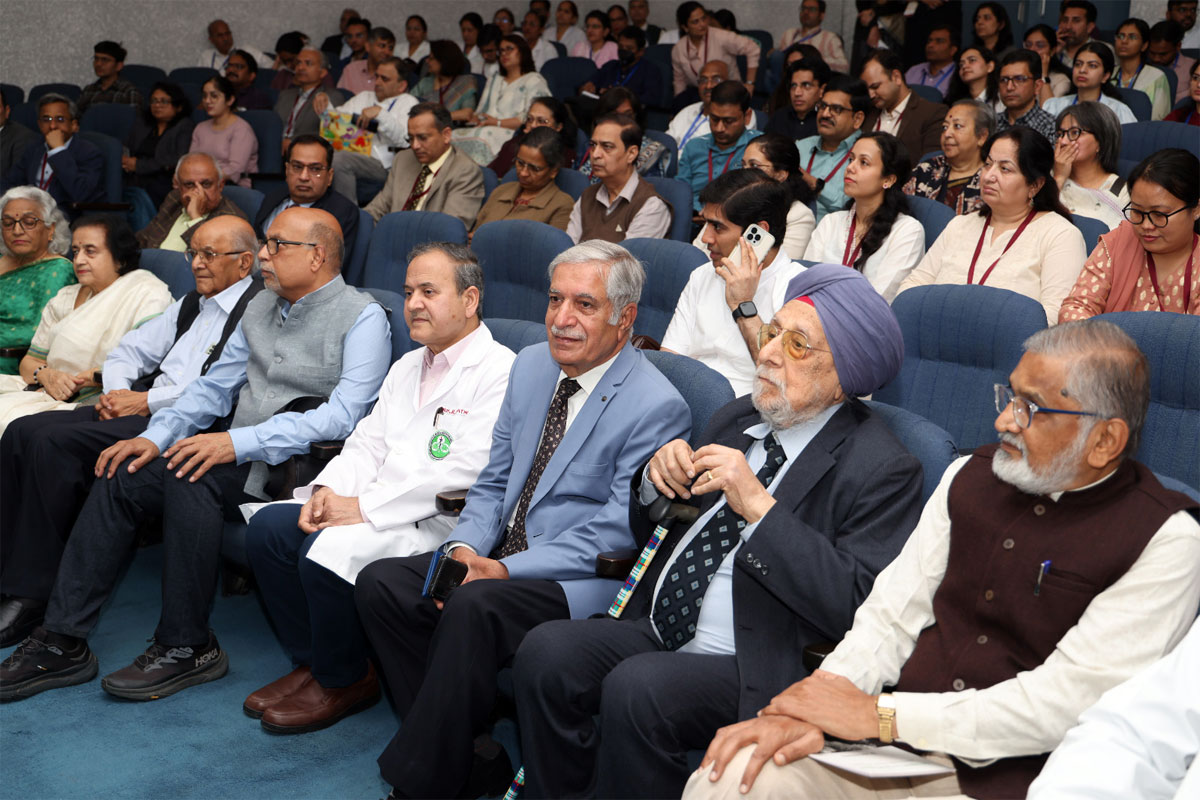
The first day of the Basics to Breakthroughs conference commenced at PGIMER with the prestigious 10th Prof. B.N.S. Walia Golden Jubilee Oration. The oration is in the honor of Dr Brij Nandan Singh Walia, who is a distinguished pediatrician and a visionary leader and whose contributions to the field of medicine and child welfare have left an indelible mark on healthcare in India. The inaugural session and the prestigious oration was presided over by Prof. Vivek Lal, Director; Prof. R. K. Ratho, Dean Academic and Prof. Praveen Kumar, Head, Dept. of Pediatrics. Quoiting an example from his residency times, Prof. Vivek Lal praised the founding fathers of the Institute including Dr B.N.S. Walia for making PGIMER a great institution as we perceive today.
The oration was delivered by eminent public health visionary Dr. Abhay Bang. Dr Bang is the Founder-Director of SEARCH (Society for Education, Action and Research in Community Health). He has been recipient of the Padma Shri and Padma Bhushan. Under his leadership, along with his equally accomplished wife Padma Shri Dr Rani Bang; a home-based Newborn Care approach has been developed that has now become a national program of the Government of India and has been replicated in several countries. He delivered lecture on “How was child mortality reduced? Gadchiroli to Global.” One of the highlights of his talk was, Acute Respiratory Infection (ARI) control programme as one of their community-based healthcare initiatives in Gadchiroli, India, that focused on training local, semi-literate village women to identify and treat childhood pneumonia (ARI) at the home level. His work underlined the necessity of the community-based healthcare models that can empower the healthcare system in resource limited settings as well as strategies applicable worldwide.
Prof. R. K. Ratho, Dean Academic, thanked Dr Abhay Bang for sharing his journey of social reforms utilising medical science by saying that the audience is mesmerized by his work in applying simple strategies for great achievements in rural India.
The subsequent scientific sessions focussed on practical clinical management in pediatric care. Experts from PGIMER discussed emergency management of tropical fever that focussed on practical protocols for evaluation and stabilization in endemic regions. Essentials of septic shock treatment was discussed elaborating the updated resuscitation strategies for children and newborns. Management of wheezy children were deliberated on evidence-based approach to recurrent wheeze and pediatric airway disease. Additional session incorporated discussions on growing concerns such as childhood obesity, metabolic syndrome, and practical management tips for Type 1 diabetes.
Scientific Sessions further explored important topics such as Infant with Cholestasis detailing the management essentials of diagnostic pathways and treatment strategies and the need for prompt evaluation within the first weeks of life. Vaccine updates elaborated the guidance on pediatric immunization practices in the context of evolving disease patterns and practical challenges. The discussion aimed to address common clinical dilemmas faced by practitioners in both hospital and community settings. Interactive “Clinical Pearls” segments provided concise, experience-based insights for practicing pediatricians. The day was concluded with guided research poster rounds with faculty-led discussion of ongoing pediatric research work, encouraging academic dialogue and showcasing emerging pediatric clinical research.