




New Delhi, April 16
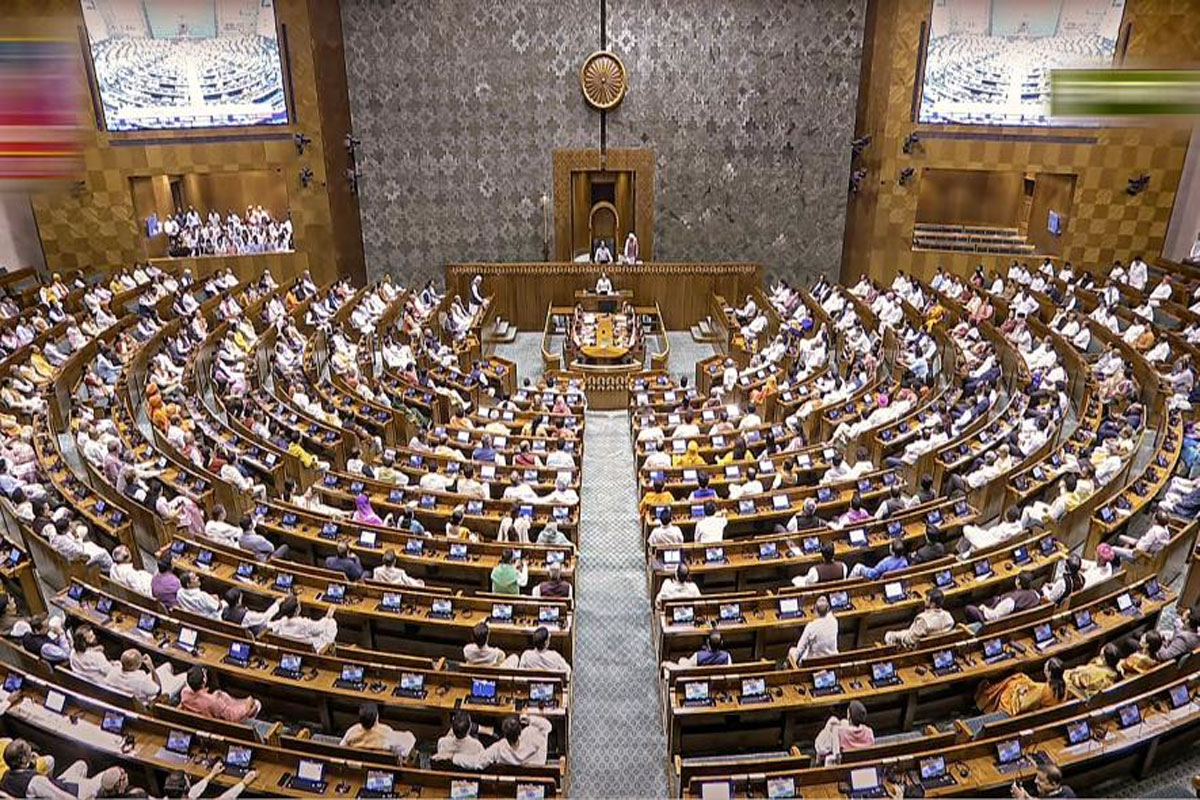
On Thursday, three bills concerning women’s reservation were introduced in the Lok Sabha, sparking intense debate. Union Law Minister Arjun Ram Meghwal announced that the strength of the House would rise from 543 to 815 seats, with 272 reserved for women under the 33 per cent quota. He emphasized that neither male representation nor any state’s share of seats would be reduced, as allocations would remain proportionally intact. Meghwal further clarified that within the women’s quota, seats would also be reserved for Scheduled Castes (SC) and Scheduled Tribes (ST) in both the Lok Sabha and state assemblies. He described the move as part of implementing the “historic decision of 2023,” urging unanimous support under constitutional provisions of Article 368(2).
The Opposition, however, strongly resisted the introduction of the Constitution (131st Amendment) Bill, the Delimitation Bill, 2026 and the Union Territories Laws (Amendment) Bill, 2026. Their objections centered on fears that the measures would undermine the federal structure and create geographical imbalances in representation, particularly between northern and southern states. A key point of contention was the government’s decision to base delimitation on the 2011 Census rather than the ongoing 2027 Census. This led to a heated 40-minute debate, culminating in a division of votes. The Constitutional Amendment Bill was introduced with 251 votes in favor and 185 against, as the extended budget session resumed with a special three-day sitting. Prime Minister Narendra Modi is expected to address the House later in the day.
Senior Congress leader K.C. Venugopal questioned the timing, asking why women’s reservation had not been implemented earlier, particularly in 2024 and warned of risks to the federal structure. Union Home Minister Amit Shah countered, noting that the 2027 Census and caste enumeration were underway, but reiterated that religion-based reservation was unconstitutional. DMK MPs, dressed in black, staged a protest, with T.R. Baalu asserting that while they supported the 2023 quota law, the current bills were essentially about delimitation. Congress MP Gaurav Gogoi accused the government of “bulldozing delimitation in the name of women’s reservation.”
Concerns over seat distribution were highlighted by psephologist Yogendra Yadav, who pointed out that southern states would lose representation if delimitation followed the 2011 Census. Kerala, for instance, would gain three seats to reach 23 but should have had 31, effectively losing eight. Tamil Nadu, which currently has 39 seats, would add 11 but still face a net loss of 11 compared to its present share. Andhra Pradesh would gain nine seats, raising its tally to 34, but in reality lose five. Meanwhile, Uttar Pradesh would benefit significantly, rising from 125 to 138 seats, a gain of 13.
Lok Sabha Speaker Om Birla announced that discussions on the three bills would span 15–18 hours, with voting scheduled for 4 pm on Friday, setting the stage for a prolonged and contentious debate during the special session.