



Chandigarh, May 20
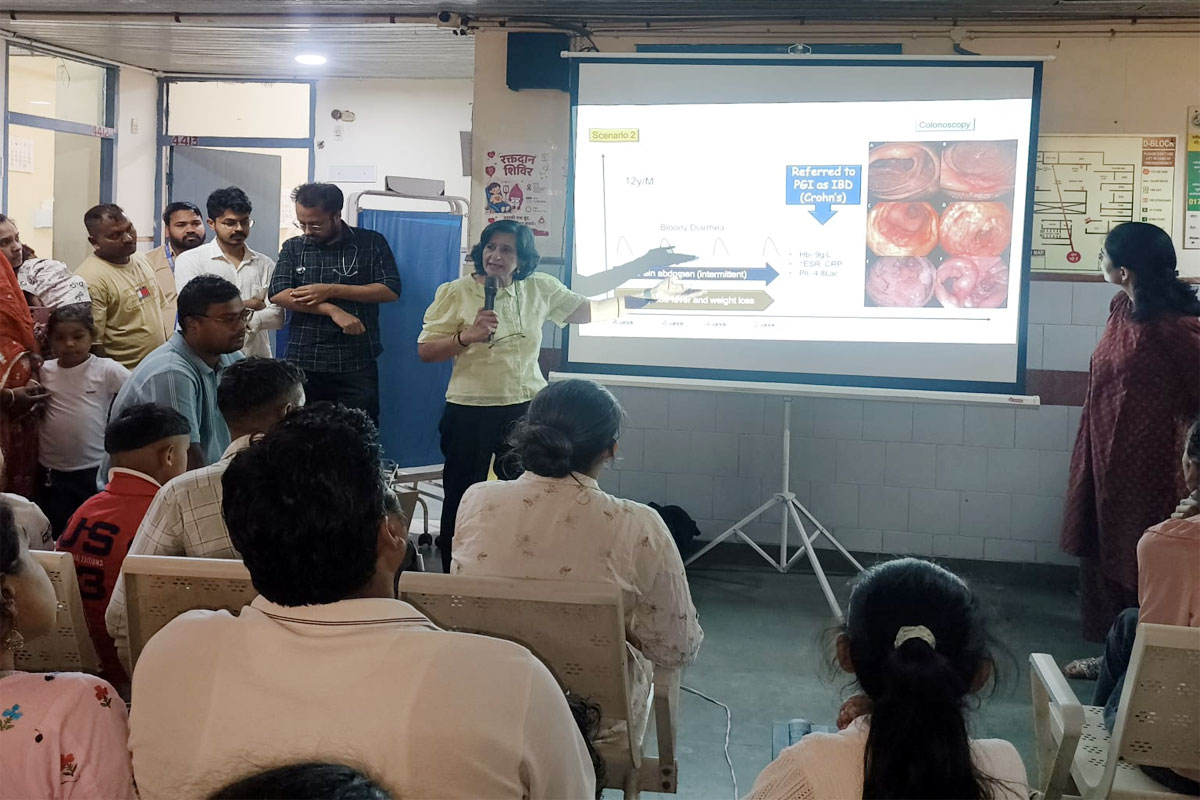
The Division of Paediatric Gastroenterology and Hepatology at PGIMER observed World Inflammatory Bowel Disease (IBD) Day by organising a comprehensive Patient Awareness Session dedicated to Paediatric IBD, highlighting the rapid rise of inflammatory bowel disease among children in India and the urgent need for specialised, child-centric management.
Addressing the gathering, Prof. Sadhna Lal, Professor & Head, Division of Paediatric Gastroenterology and Hepatology, PGIMER, highlighted the growing prevalence of paediatric IBD in India and expressed concern over widespread misinformation and delayed diagnosis.
Prof. Sadhna Lal stated, “IBD in children is no longer rare. Factors like dietary changes, urban lifestyles, processed food habits and indiscriminate use of antibiotics and acid-suppressing medicines have contributed significantly to this growing burden.”
Emphasising the distinct nature of childhood IBD, Prof. Lal remarked, “Children are not small adults. Paediatric IBD requires a completely different approach because the disease affects not only the intestine but also the child’s growth, nutrition, emotional wellbeing, schooling and overall development.” She further stressed that children with IBD must be evaluated and managed by trained Paediatric Gastroenterologists rather than adult specialists.
“Treating children like small adults is a clinical misjudgement. Paediatric IBD behaves differently, progresses differently and requires specialised expertise. Children upto 18 years with IBD should ideally be managed by Paediatric Gastroenterologists because their nutritional, developmental and psychological needs are unique,” Prof. Lal said.
Highlighting the increasing disease burden, she noted that while PGIMER earlier encountered only 7–8 paediatric IBD cases annually, the institute is now diagnosing nearly 7–8 new cases every month, reflecting both rising incidence and improved awareness. Prof. Lal cautioned parents against self-medication and premature diagnosis. “Loose motions, abdominal pain, or blood in stools do not automatically indicate IBD. Conditions such as amoebiasis, intestinal infections, and several other disorders can closely mimic IBD in children. Therefore, a thorough evaluation by a trained Paediatric Gastroenterologist is essential before labelling a child with a lifelong disease,” she said.
The session highlighted that paediatric IBD, including Ulcerative Colitis and Crohn’s Disease, is often more aggressive in children than adults and may affect the entire gastrointestinal tract. Delayed diagnosis can adversely impact growth, bone health, nutrition, puberty, mental wellbeing and academic performance.
Speaking about early intervention, Prof. Lal observed, “There is a critical ‘window of opportunity’ in the early stage of disease where timely treatment can prevent severe complications, repeated hospitalisation and expensive therapies later.”
Prof. Lal also discussed Monogenic IBD, a distinct form of the disease affecting very young children, which requires specialised diagnostic and therapeutic approaches.
A strong emphasis was laid on nutrition and lifestyle modification as important pillars of disease management. Prof.Lal advised families to encourage healthy eating habits and reduce dependence on processed and junk foods. “Well-cooked, fresh and natural foods form the base of dietary therapy, while processed, spicy and deep-fried foods can worsen intestinal inflammation and should be avoided,” she said.
The session also focused on the role of environmental triggers, sedentary lifestyle, excessive stress, pollution and indiscriminate medication use in disturbing gut health and increasing susceptibility to IBD among children.
Highlighting the emotional dimension of the disease, Prof.Lal remarked, “Stress is one of the major triggers for IBD flare-ups. Since this is a lifelong condition, society, schools and families must adopt a more compassionate and supportive approach so that these children can lead near-normal, productive and confident lives.” She further advocated stronger collaboration between healthcare systems, educational institutions, and the pharmaceutical sector to improve affordability and accessibility of treatment.
“Government support, school sensitisation, parental awareness and access to affordable medicines can significantly improve long-term outcomes and quality of life for children living with IBD. Schemes such as Ayushman Bharat have emerged as a major support for many families by substantially reducing the financial burden associated with long-term treatment and follow-up care,” stated Prof. Lal.
Reassuring parents and caregivers, Prof. Lal said, “Although IBD is a lifelong condition, most children can achieve good disease control and lead healthy, productive lives through timely diagnosis, regular follow-up, nutritional counselling and evidence-based treatment. The awareness programme concluded with an interactive discussion session addressing concerns related to diet, stress, schooling, treatment myths and long-term management strategies for children with IBD.