




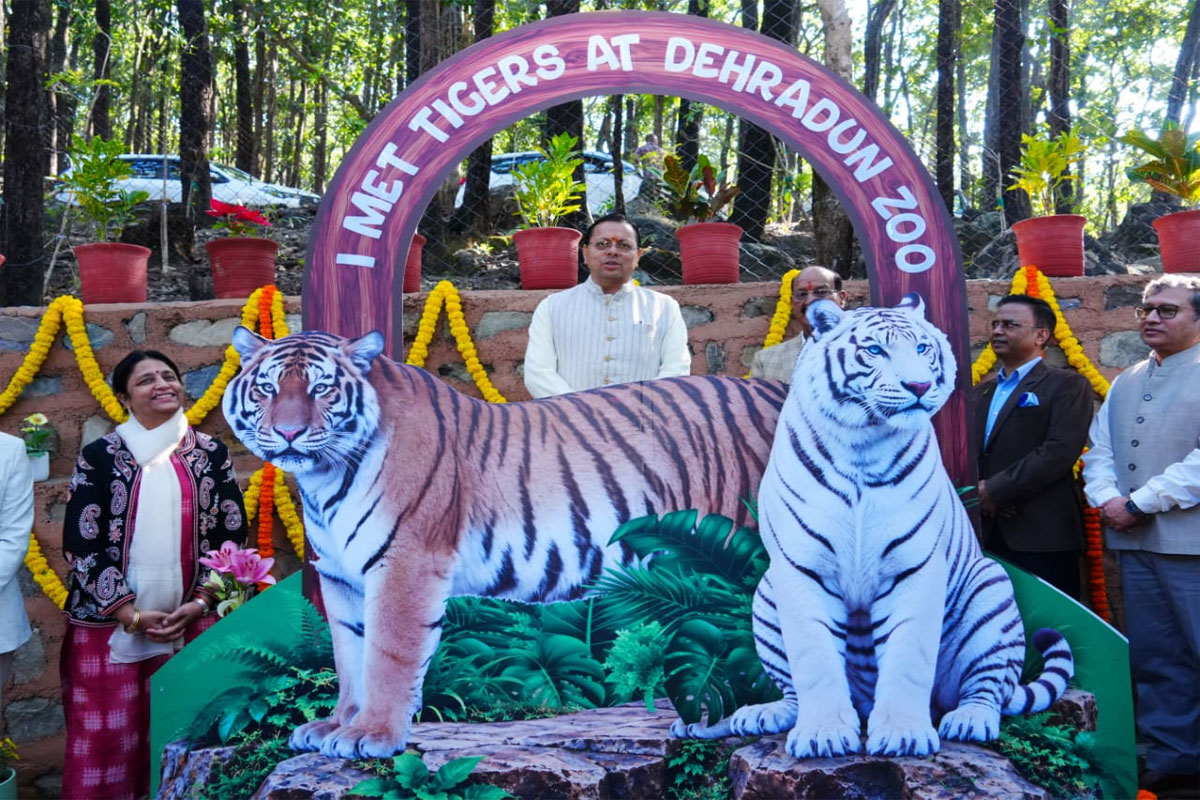
With the inauguration of the enclosure housing white tiger ‘Tejas’, Dehradun Zoo added a new star attraction on Thursday, as Uttarakhand Chief Minister Pushkar Singh Dhami dedicated the majestic feline to public viewing and said its arrival would significantly enhance the zoo’s appeal among wildlife enthusiasts and tourists alike.
Highlighting the zoo’s growing stature as a major wildlife and tourism destination, Dhami said Dehradun Zoo attracts nearly 8.5 lakh visitors annually and generates revenue exceeding ₹7 crore. He expressed confidence that the arrival of white tiger ‘Tejas’, the first of its kind in Uttarakhand, would further boost tourist footfall and strengthen the zoo’s appeal among wildlife enthusiasts. He noted that the zoo had earlier added two other tigers, which had significantly enhanced visitor interest and popularity.
Describing the facility as much more than a tourist attraction, the Chief Minister said Dehradun Zoo serves as a vital centre for environmental education and wildlife awareness. It offers children and young visitors a first-hand opportunity to understand wildlife conservation, forest biodiversity and ecological balance, helping foster a deeper connection with nature and a greater appreciation of the need to protect it.
Building on the success of the free-entry scheme for children, which has helped inculcate awareness about wildlife and the environment among young visitors, Dhami announced that college students would now also be granted complimentary access to Dehradun Zoo. He said the initiative would transform the zoo into a living classroom, offering students practical insights into biodiversity, wildlife conservation and ecological sustainability, while encouraging a new generation of environmentally conscious citizens committed to safeguarding Uttarakhand’s rich natural heritage.
Reaffirming his government’s commitment to sustainable growth, Dhami said Uttarakhand’s unique Himalayan ecology demands a development model that carefully balances economic progress with environmental conservation. As a state frequently confronted by natural disasters, preserving ecological equilibrium is not merely a policy choice but a necessity, he observed, stressing that responsible development and environmental protection must go hand in hand.
Dhami further said that Uttarakhand’s sprawling forests, abundant wildlife and remarkable biodiversity constitute an invaluable natural heritage that must be preserved for future generations. Calling conservation a shared societal responsibility, Dhami stressed that instilling environmental sensitivity among young people is just as important as protecting wildlife. Institutions such as Dehradun Zoo, he said, are emerging as vital centres of learning and awareness, helping shape a generation that values, understands and actively contributes to safeguarding nature.