




Chandigarh, May 22
The Department of Forest & Wildlife, Chandigarh Administration, in collaboration with the Wildlife Institute of India (WII), successfully conducted a comprehensive rapid multi-taxon wildlife survey in Sukhna Wildlife Sanctuary and adjoining forest areas of Chandigarh from November 20 to 27, 2025.
The survey covered ecologically important areas including Lake Beat, Patiala Ki Rao, Sukhna Choe Forest, Botanical Garden, Butterfly Park and City Bird Sanctuary, with active participation from forest officials, researchers, NGOs, volunteers, media representatives and other stakeholders.
Prior to the field exercise, a two-day capacity building workshop on “Wildlife Survey & Techniques” was organized on November 18 and 19, 2025 to strengthen technical understanding and scientific survey methodologies among departmental officials and participants.
The survey employed scientific methods such as line transects, sign surveys, camera trapping, point count surveys and audimetric sampling to assess biodiversity across vegetation, mammals, birds, butterflies and herpetofauna.
The vegetation survey documented 79 plant species, including 43 tree species, 14 shrub species and 22 herb species across 50 nested quadrat plots laid at 12 locations within the sanctuary. Eucalyptus species emerged as the dominant tree species, while Justicia adhatoda was identified as the densest shrub species with significant ecological importance in soil and moisture conservation.
The herpetofaunal survey recorded 13 species including frogs, turtles, snakes and lizards. Of these, five species fall under Schedule-I and one under Schedule-II of the Wildlife Protection Act.
The butterfly survey documented 73 species belonging to five families, with Nymphalidae recorded as the dominant family. Yellow Orange Tip was found to be the most abundant butterfly species, while notable Schedule-II species included Pea Blue, Common Onyx and Indigo Flash.
The avifaunal survey recorded an impressive 132 bird species, including 13 Schedule-I species and 117 Schedule-II species under the Wildlife Protection Act. As per IUCN conservation status, the survey documented two endangered species, one vulnerable species and three near-threatened species. Hume’s Warbler was recorded as the most abundant bird species in the study area.
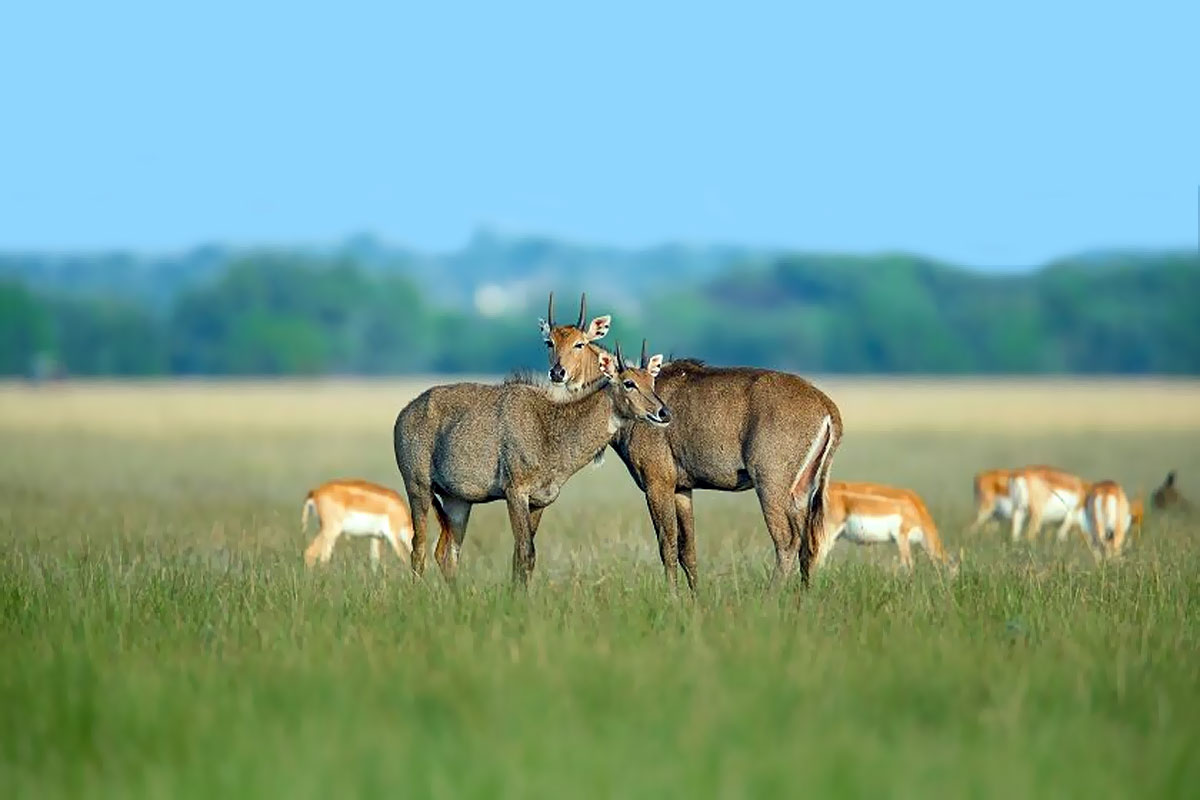
The mammal survey documented 16 species through direct sightings and indirect evidences such as tracks, scats, pellets and pugmarks across 13 survey trails. Ungulates including Sambhar Deer, Nilgai and Wild Boar dominated the mammalian assemblage. The density of Sambhar Deer was estimated at 22.34 ± 8.07 individuals per square kilometre.
A total of 466 independent wildlife captures were recorded through 18 camera trap stations deployed over 125 trap nights. Significantly, the survey confirmed the presence of two unique adult male leopards in the sanctuary through 11 independent detections based on their distinct rosette coat patterns. The study also revealed predominantly nocturnal activity patterns in leopards and Indian Crested Porcupines.
Compared to the previous survey conducted in 2021, the latest survey recorded a substantial increase in biodiversity documentation, with mammalian species increasing from 14 to 16 and bird species from 67 to 132. The inclusion of butterfly and herpetofaunal assessments for the first time has further expanded the scope of biodiversity monitoring in Chandigarh.
The findings of the survey are expected to significantly strengthen biodiversity conservation planning, habitat management, ecological monitoring and wildlife conservation efforts in Chandigarh’s forest landscapes.
The Department of Forest & Wildlife also acknowledged the valuable contribution and support of the Wildlife Institute of India, field staff, volunteers, NGOs and media representatives in successfully conducting the survey.