




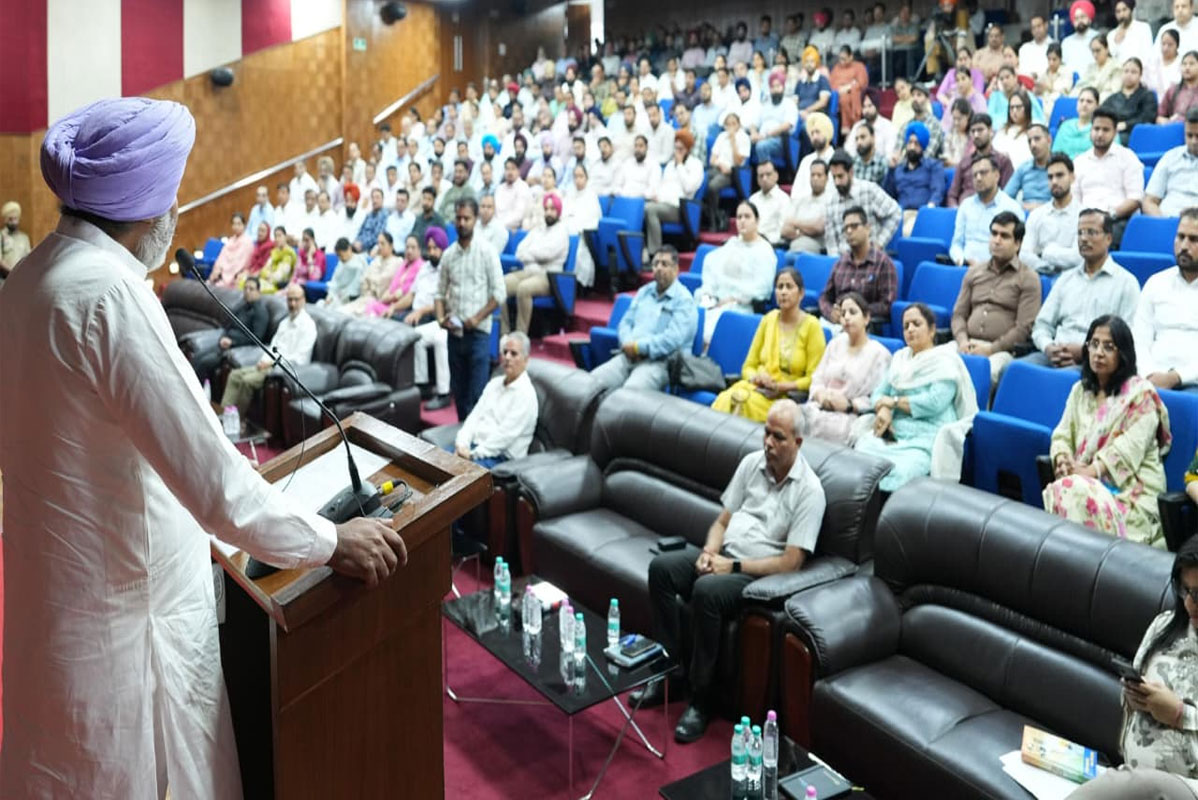
Chandigarh, May 8
The Punjab Government on Friday marked a major milestone in financial governance with the launch of the Unified Sanction Management System (USMS). This e-sanction module was formally inaugurated by Punjab Finance Minister Harpal Singh Cheema to digitize the processing of sanctions and seamlessly integrate them into the state’s payment systems.
The strategic rollout not only replaces outdated manual processes with an end-to-end digital workflow but also aligns with central guidelines, thereby unlocking massive potential financial incentives for the state.
Discussing the launch of the e-sanction module during its launch event held here at Municipal Bhawan Auditorium, Finance Minister Harpal Singh Cheema stated, “To ensure better financial management, transparency and end to end digitisation Department of Treasuries & Accounts in coordination with NIC has developed an e-sanction module for issue of Admin, technical and financial sanctions online and thereafter automatic pushing of the sanction to IFMS for bill generation”.
Detailing the key benefits of the e-sanction modules, the Finance Minister highlighted enhanced transparency and accountability. He said, “Every stage of sanction processing is digitally recorded with user credentials, timestamps, and approval hierarchy, creating a complete audit trail and improving accountability. The system validates budget availability before issuance of sanctions, helping departments avoid excess expenditure and ensuring adherence to budget provisions”.
Regarding the digitization of sanctions, Cheema added, “The e-Sanction module has been introduced to replace the manual and paper-based sanction process with a fully digital workflow, thereby improving efficiency and transparency in government financial administration. The module brings uniformity in the format and processing of sanction orders across departments, reducing inconsistencies and procedural errors”.
On the crucial aspect of end-to-end integration with IFMS, the minister assured, “The module ensures seamless integration of sanction orders with budgeting, treasury, bill processing, and payment systems within IFMS, reducing duplication of work and manual intervention. Automated validations minimise clerical mistakes related to head of account, amount, scheme mapping, and beneficiary details”.
Providing background on the portal’s strategic origins, the Finance Minister said, “This module has been developed in compliance with DLI-3 under BFAIR. The Government of India has issued new Guidelines for Special Assistance to States for Capital Investment (SASCI) 2026-27, outlining various financial reforms under different Parts. These guidelines include implementation of the “e-Sanction Module” by the office of the Directorate of Treasury & Accounts (DTA).”
Concluding his address, Cheema shared his vision for the future impact of this technology. He emphasised, “Upon successful and complete rollout, this initiative is expected to drive a significant transformation in the State by ensuring seamless end-to-end traceability in the digital creation, approval and monitoring of financial, administrative and technical sanctions and will also make state eligible for Incentive of ₹50 Cr under SASCI Guidelines”. The inauguration ceremony also witnessed expert lectures on the module’s working by the World Bank team and a detailed presentation by the NIC team.