




Chandigarh, November 5
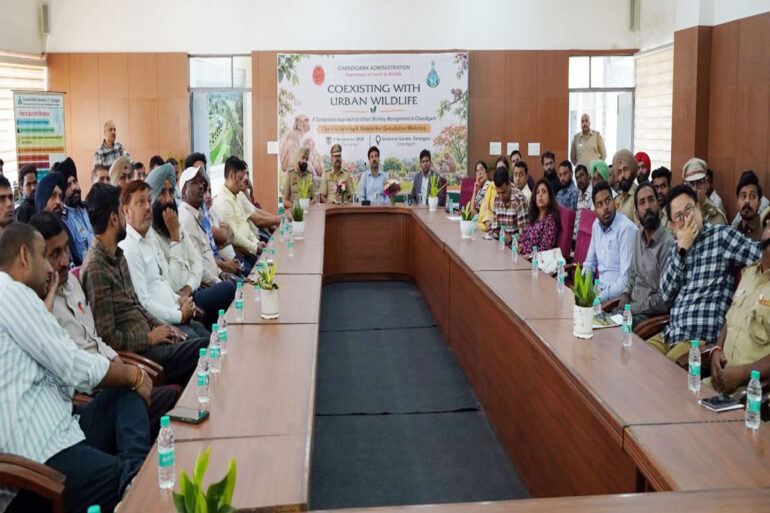
The Department of Forests & Wildlife, UT Chandigarh, organised a workshop at the Botanical Garden, Sarangpur, to address human–monkey conflict and monkey-related problems in the city. The workshop brought together wildlife experts, government departments, academic institutions and other stakeholders to explore scientific, humane and long-term solutions, with emphasis on prevention, public safety and coexistence.
Senior forest officials, including Shri Anup Kumar Soni, IFS, Conservator of Forests & Chief Wildlife Warden, and Shri Satyendra Maurya, IFS, Deputy Conservator of Forests, Chandigarh, led the deliberations. The Department stressed that urban monkey management requires a shift from reactive rescue operations to proactive, science-based management of habitats and the wider landscape. It highlighted ongoing measures to improve connectivity between tree canopies and increase the availability of natural fruits within reserved forest pockets, while calling for coordinated action across all line departments.
Subject expert Dr. Sandeep Sharma delivered a technical session on monkey behaviour, ecological adaptations and scientific management measures. Drawing upon his field experience, he discussed sterilisation, feeding behaviour, waste management, safe handling techniques, specialised equipment, monkey cages and operational preparedness. He emphasised the need to understand and address the factors that repeatedly attract monkeys to human settlements.
During the interactive discussions, participants raised recurring monkey-related concerns in Sectors 22 and 27, PGI, Panjab University and the Sector 26 market area. The deliberations underscored the need for targeted interventions at identified hotspots, improved solid waste management, discouraging intentional feeding of monkeys and effective complaint handling.
A key takeaway was that capture, relocation or sterilisation alone cannot provide lasting relief unless the underlying causes of human–monkey conflict are also addressed. Scientific population management, wherever appropriate, must be supported by preventive measures, institutional preparedness and responsible public behaviour.
The workshop reaffirmed that safeguarding citizens and conserving wildlife are complementary responsibilities. It was emphasised that the effectiveness of management measures should be assessed through fewer recurring conflicts, improved public safety and humane treatment of animals, rather than merely by the number of monkeys captured.
Representatives of the Municipal Corporation, Resident Welfare Associations, NGOs, various line departments and academic institutions attended the workshop, along with Eco-Club members and other stakeholders. The programme provided a platform to share experiences and strengthen collective efforts towards sustainable management of human-monkey conflict in Chandigarh.