




Chandigarh, August 13
In Punjab’s political theatre, the BJP has resembled the protagonist of Kabhi Haan Kabhi Naa—the Shah Rukh Khan classic where the lead character swings between yes and no, certainty and doubt. For months, BJP leaders have declared they will contest solo in the upcoming Assembly elections, yet the party’s state unit and central leadership have kept shifting tone.
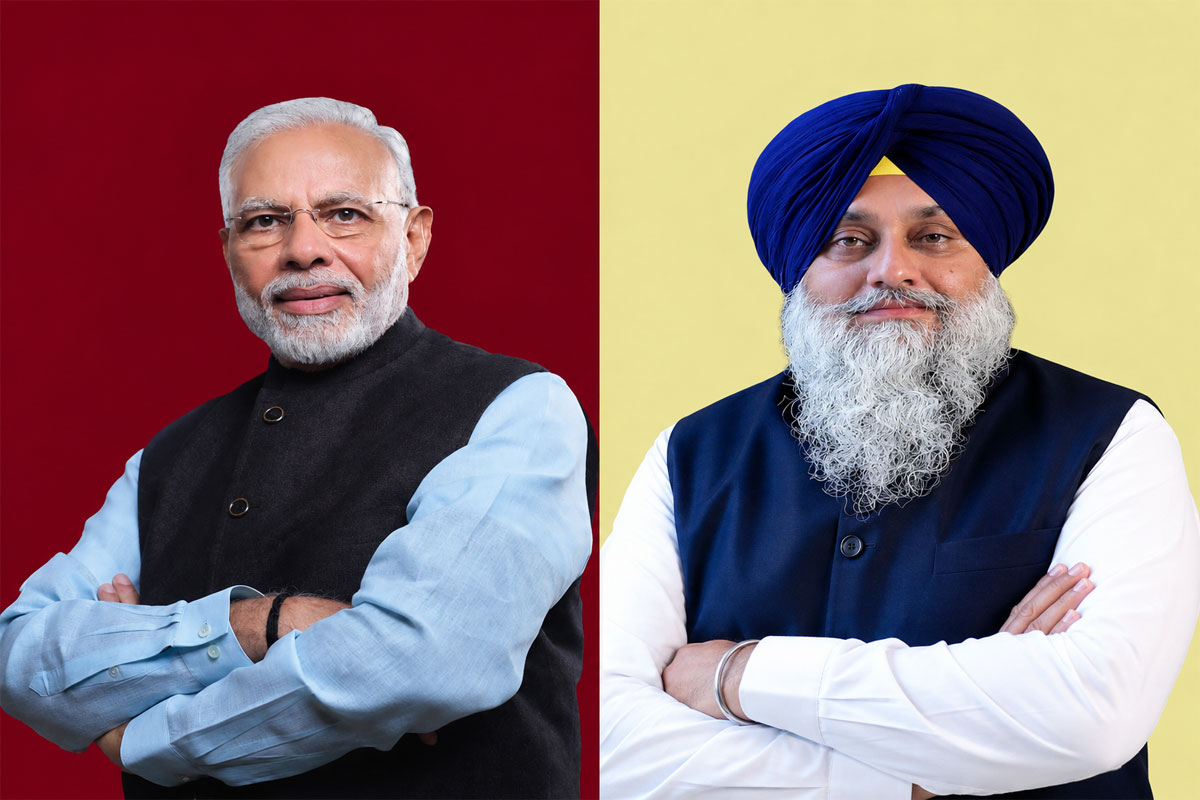
Neither the BJP nor the Shiromani Akali Dal has openly spoken of reviving their alliance, but speculation has flared each time symbolic gestures surfaced—most notably when SAD president Sukhbir Singh Badal met Prime Minister Narendra Modi in the Parliament House complex in New Delhi on August 7, 2026. What followed was Shiromani Akali Dal’s call for immediate implementation of the Women’s Reservation Bill. Such signals, appearing and disappearing in quick succession, have kept the alliance question dangling, fuelling intrigue in Punjab’s volatile political landscape.
Notably, on March 14, addressing the Badlaav Rally at Killi Chahlan in Moga, Union Home Minister Amit Shah had announced that the Bharatiya Janata Party would contest the 2027 Punjab Assembly elections independently.
In mid‑May, leaders from both the BJP and Shiromani Akali Dal (SAD), speaking to The News Gateway on condition of anonymity, had disclosed that backchannel talks were underway. They suggested that if discussions progressed smoothly, a formal alliance could be announced after the upcoming Municipal Elections.
On June 13, the BJP dismissed speculation about a possible tie‑up with the Shiromani Akali Dal, reiterating that the saffron party was preparing to contest all 117 seats independently in the 2027 Punjab Assembly elections. What makes this more intriguing is that less than two weeks later, on June 25, BJP national president Nitin Nabin categorically stated that a decision on alliance with the Akali Dal would be taken “when the time comes” — a remark widely read as leaving the door open to a potential reunion between the two parties.
In July, away from the media spotlight, Punjab BJP president Kewal Singh Dhillon instructed state leaders to refrain from making public comments on alliance, stressing that such a decision would rest solely with the party high command. He had emphasized the need to focus on cadre‑building across all constituencies while leaving room for future flexibility.
On August 7, the meeting between SAD president Sukhbir Singh Badal and Prime Minister Narendra Modi at Parliament House sparked widespread speculation about a possible revival of the BJP–SAD alliance. Then, on August 9, the Shiromani Akali Dal called for the immediate implementation of the Women’s Reservation Bill. This move further strengthened the perception that the two parties might be inching closer to a reunion. Four days later, in another twist, after the Sukhbir-Modi meeting, on August 12, Dhillon categorically stated that the BJP would contest the Punjab Assembly elections solo.
In essence, the BJP’s shifting signals have turned Punjab’s alliance question into a political cliffhanger. Each declaration of going solo has been shadowed by gestures that hint at reconciliation, leaving observers to wonder whether the party is scripting a deliberate strategy of ambiguity. The unfolding drama is reminiscent of Kabhi Haan Kabhi Naa—the Shah Rukh Khan movie where uncertainty and hesitation define the protagonist’s journey. As the countdown to 2027 gathers pace, the suspense over a possible BJP–SAD reunion remains less about certainty and more about timing—ensuring that Punjab’s political theatre continues to play out like a drama where the final act is yet to be revealed.
(Views expressed are personal.)