




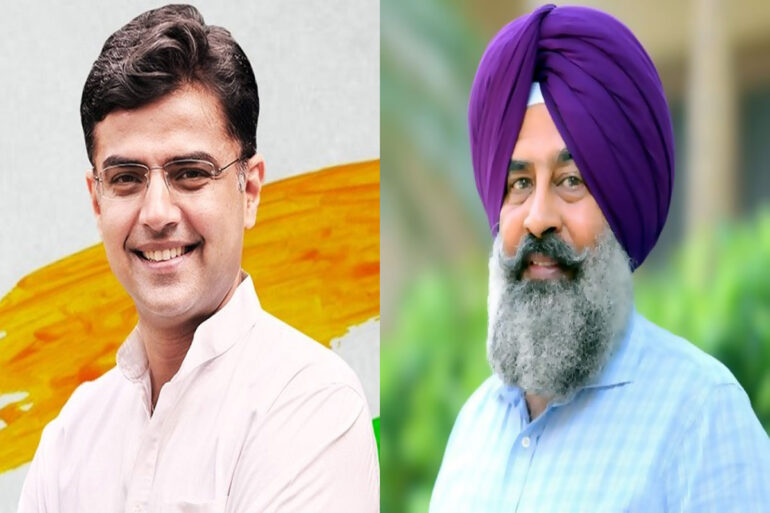
Amid relentless churn and turmoil in the Punjab Congress, the AICC high command’s move to appoint Hockey Olympian and former Punjab Minister Pargat Singh as the new State unit chief appears “highly unlikely” to yield any “meaningful breakthrough” in ending factionalism ahead of the upcoming Punjab polls.
While Pargat will make every attempt to bridge the divide between Amarinder Singh Raja Warring and Charanjit Singh Channi camps with AICC general secretary in-charge Sachin Pilot playing a crucial role, the bitter animosity between the Warring and Channi camps has reached such entrenched levels that reconciliation seems virtually impossible.
When the top brass of the AICC, including Rahul Gandhi, failed to resolve the differences between the Warring and Channi camps, neither Sachin Pilot nor Pargat Singh stands any chance of ending the impasse. Senior Congress leaders openly admit that “things have reached a point of no return,” making a united campaign under the leadership of Leader of Opposition Rahul Gandhi and AICC president Mallikarjun Kharge more of a “distant dream” than a practical reality.
Warring loyalists have already unofficially declared, “Warring is our leader and we will only follow his orders.” They insist that participation in election rallies or programmes will depend solely on whether Warring is invited with due respect and he chooses to attend. Channi’s supporters echo the same sentiment, signalling that both factions are prepared to hold separate meetings and rallies in support of their respective candidates.
If this actually happens, the parallel campaigning would starkly expose the fractured state of the Punjab Congress, sending a damaging message of division to the electorate. Even in rallies to be attended by central leaders like Rahul Gandhi, Priyanka Gandhi, etc., the presence of both factions is expected to be tokenistic—driven more by fear of disciplinary action than genuine unity.
Meanwhile, the most daunting challenge for the high command looms in ticket distribution. With claims expected on at least half of the 117 constituencies, the winnability criteria—traditionally based on survey reports—may collapse under the weight of factional disputes. Past surveys have often proven unreliable, further complicating the process.
Furthermore, the inevitable confrontation between the Warring and Channi camps during candidate selection threatens to deepen the crisis. In this scenario, the opposition parties stand to gain the most. A united Congress can pose a formidable challenge but a “divided house” will only strengthen its rivals.
The bottomline is that unless the party manages to project genuine unity beyond mere photo-ops, the Grand Old Party (GOP) risks reducing itself to a weakened force, leaving the battlefield wide open. The fight, then, may not be about Congress versus opposition but about whether Congress can even fight as one party—or remain trapped in its own internal war.