




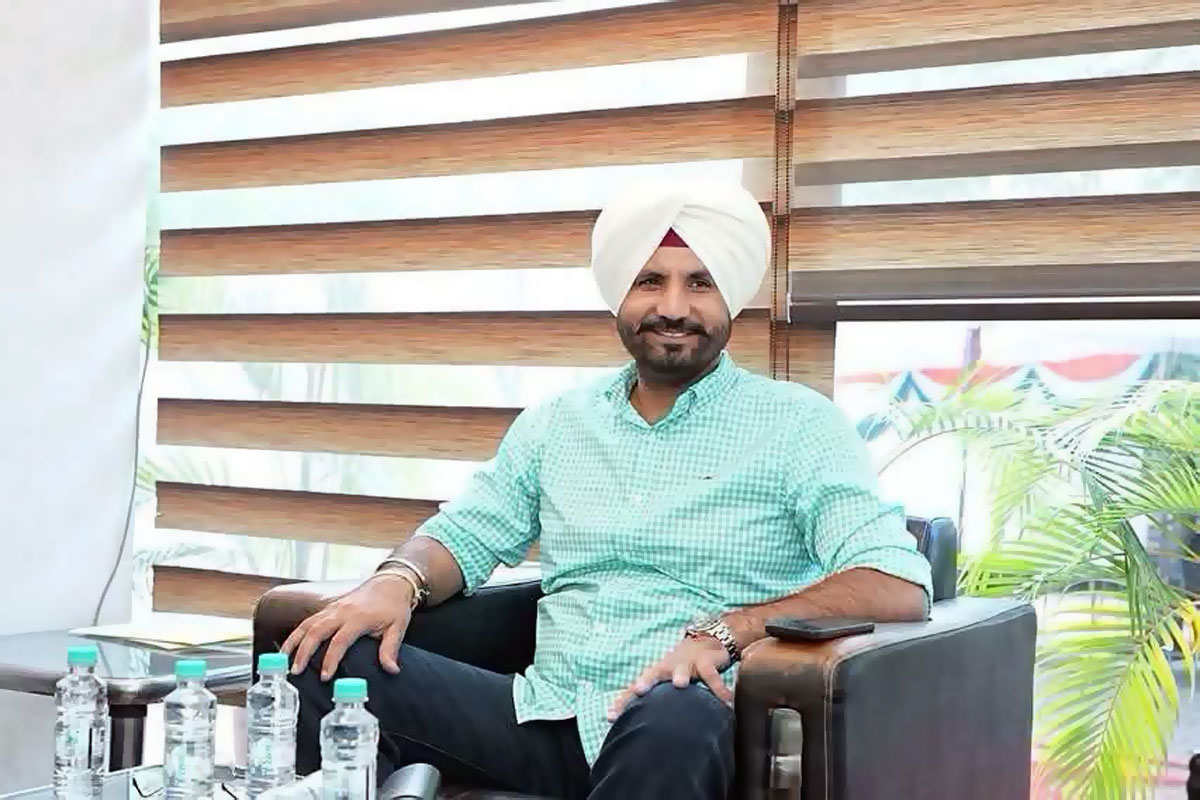
In what can only be described as a “disastrous” misstep, the Grand Old Party (GOP) – Congress has repeated the very blunder that cost it dearly ahead of the 2022 Punjab Assembly Elections. Bowing to the pressure of disgruntled leaders, the All India Congress Committee (AICC), under the influence of Rahul Gandhi, Leader of Opposition in the Lok Sabha, has removed Punjab Pradesh Congress Committee (PPCC) president Amarinder Singh Raja Warring. The irony is stark: barely three months ago, the AICC had unveiled various election committees while reaffirming Raja Warring as PPCC president and Partap Singh Bajwa as Leader of Opposition in the Punjab Assembly. This abrupt reversal not only undermines its own earlier strategy but also signals a repeat of the destabilizing experiments that fractured the party before the last polls.
Since then, Warring’s rival faction had been relentlessly mounting pressure for his removal. Yet, unfazed by their demands, the then general secretary in‑charge of Punjab Affairs, Bhupesh Baghel, undertook a ten‑day tour across Punjab and submitted a detailed report to the AICC. In it, he strongly recommended that Warring should continue as the Punjab Congress chief. Even during Baghel’s visit, Warring’s opponents—most prominently former CM and Jalandhar MP Charanjit Singh Channi—chose to boycott the programmes. In a strikingly provocative move, Channi’s camp went so far as to equate Baghel with General Dyer, plastering hoardings across towns that screamed “Bhupesh Baghel Go Back.” This brazen act not only exposed the depth of factional hostility but also underscored the lengths to which Warring’s detractors were willing to go in their campaign of defiance.
Bowing down to the faction led by Charanjit Singh Channi, the AICC eventually replaced Bhupesh Baghel with Sachin Pilot as the general secretary in‑charge of Punjab Affairs. It is now learnt that, acting on the basis of the report submitted by Sachin, the AICC—primarily Rahul Gandhi—moved to remove Amarinder Singh Raja Warring. This calculated shift, driven by internal pressures and factional maneuvering, underscores the Congress high command’s willingness to sacrifice consistency for appeasement, repeating the same destabilizing experiment that had earlier weakened the party’s position in Punjab.
It is pertinent to mention here that in the aftermath of the Congress debacle in the 2022 Punjab Assembly elections, the AICC had entrusted Amarinder Singh Raja Warring with the responsibility of State Congress chief on April 22, 2022. During the 2024 Lok Sabha elections, the high command directed him to contest from Ludhiana, where he complied with the party’s diktat and went on to defeat three‑time MP Ravneet Singh Bittu. Yet, after a tenure spanning over four and a half years, and with state elections just months away, Warring has now been replaced — a move that not only sidelines a proven leader but also gravely diminishes the party’s electoral prospects at a critical juncture.
What is significant is that during his tenure as PPCC president, Warring steered the party through a series of crucial battles — Lok Sabha, Municipal Corporations and Councils, Panchayat and Zila Parishad elections, along with few assembly by‑polls — handling each with remarkable efficiency. Despite AAP allegedly deploying the full spectrum of “saam, daam, dand, bhed,” Congress’s performance under his leadership remained impressive. The crowning achievement of Warring’s tenure was that, for the first time in years, Congress managed to secure 7 out of Punjab’s 13 parliamentary constituencies — a resounding testament to his organizational acumen and ability to convert resilience into results.
Now, another pertinent question arises: over the past four and a half years, Warring, who tirelessly visited every corner of Punjab not once but multiple times, succeeded in building a deep rapport right down to the Sarpanch level. The critical issue is whether the new president, likely to be announced anytime soon, can replicate that grassroots connect within just two months. This stark contrast between years of painstaking groundwork and the limited time now available raises serious doubts about the party’s ability to sustain its organizational strength and voter outreach at such a crucial juncture.
Also, the change of guard in Punjab is not merely about the Congress’s electoral prospects — it starkly exposes the weak command and wavering leadership at the Centre. Removing Warring carries far‑reaching consequences. It sends out a clear message that Rahul Gandhi has capitulated to the handful of leaders clamoring for Warring’s ouster. More dangerously, it sets a precedent with pan‑India repercussions: the very act of bowing to pressure now becomes a template for every state unit. Tomorrow, leaders in another state with similar demands will feel emboldened to deploy the same tactics, confident that lobbying and factional pressure can overturn the high command’s word. In effect, the authority of the central leadership stands diminished, its decisions no longer final but vulnerable to reversal under the weight of internal dissent.
In conclusion, the Congress’s abrupt decision to remove Amarinder Singh Raja Warring is far more than a routine reshuffle — it is a gamble that risks undoing years of painstaking groundwork and organizational revival in Punjab. By sidelining a leader who delivered tangible results and commanded grassroots respect, the high command has not only weakened its electoral prospects in a crucial state but also eroded its own authority at the national level. What was intended as a tactical adjustment now stands exposed as a strategic blunder, one that threatens to reverberate across the party’s state units and cast a long shadow over its credibility in the run‑up to the next electoral battle.