







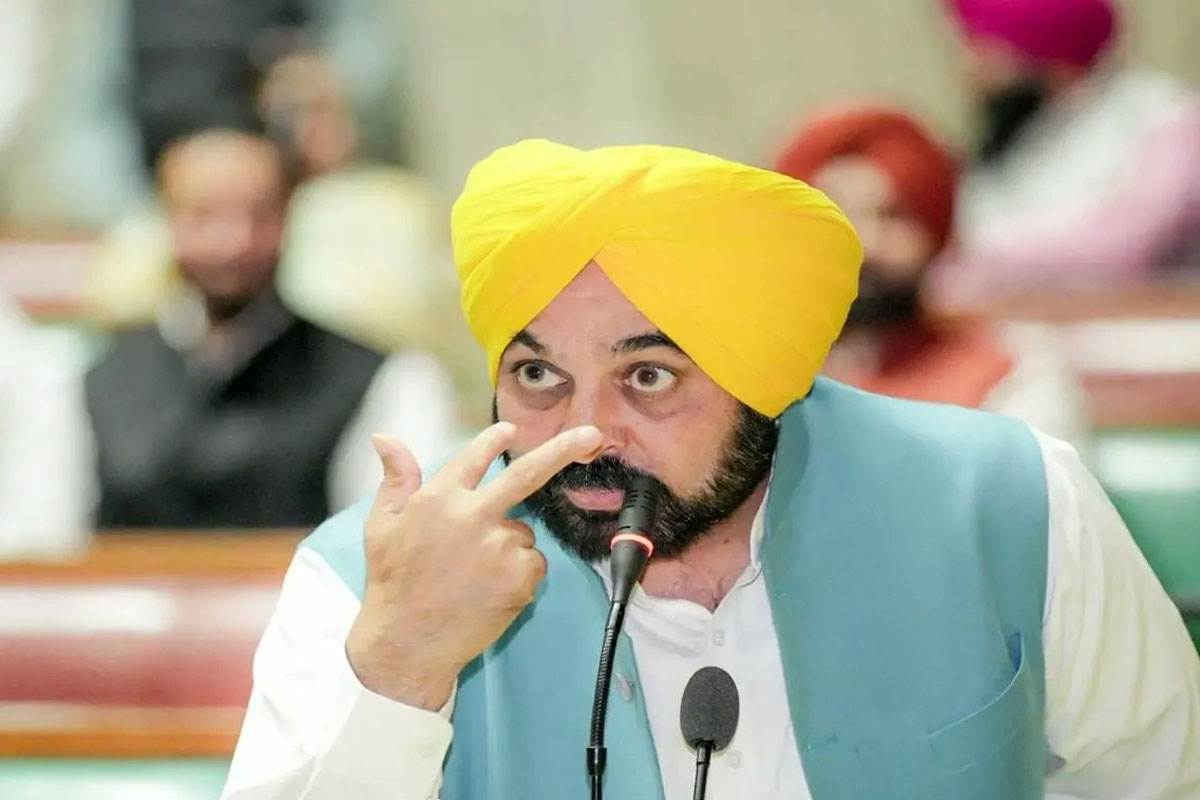
Punjab did not elect the Aam Aadmi Party merely to replace one political establishment with another. It voted for change, accountability, clean governance and a better future. Four years later, the question confronting Chief Minister Bhagwant Mann is not whether his government has fulfilled its promises but how spectacularly it has squandered the extraordinary trust reposed in it.
A mandate for change
The 2022 Punjab Assembly election was nothing short of a political earthquake. After decades of alternating governments led by the Congress and the Shiromani Akali Dal-BJP alliance, Punjabis decided to give the Aam Aadmi Party an opportunity. They were not necessarily voting for an established political organisation; they were voting against an entrenched political culture. They wanted a break from traditional politics, corruption, nepotism and unfulfilled promises.
AAP’s landslide and the promise of transformation
The verdict was unprecedented. AAP swept 92 of the 117 Assembly seats, reducing virtually every political heavyweight to a political footnote. Two-time Chief Minister Captain Amarinder Singh, five-time Chief Minister Parkash Singh Badal, SAD president Sukhbir Singh Badal, Bikram Singh Majithia, former Chief Minister Charanjit Singh Channi and Congress heavyweight Navjot Singh Sidhu were among the prominent casualties. The BJP, too, suffered a humiliating setback. It was a mandate that offered Bhagwant Mann an opportunity few Chief Ministers in Punjab’s history have enjoyed. He inherited not merely a government but an extraordinary political opportunity to transform the state.
Unfortunately, the man who promised a new Punjab appears to have become the biggest disappointment of that mandate – from ‘Badlav’ to bad governance
The initial enthusiasm surrounding the Mann government gradually gave way to disillusionment. The promises that had powered AAP’s electoral triumph began colliding with the realities of governance. The much-publicised anti-corruption crusade suffered an early embarrassment when Health Minister Vijay Singla was sacked and arrested in May 2022 over allegations of demanding a commission in government tenders. Food Processing Minister Fauja Singh Sarari subsequently resigned amid controversy over an alleged audio recording concerning extortion from contractors. Other AAP legislators and functionaries, too, faced corruption-related investigations. The irony was unmistakable. A party that had built its political identity around eliminating corruption increasingly had to explain controversies involving its own people. The subsequent legal developments in individual cases also underline why allegations must not be confused with convictions. But politically, the damage to AAP’s carefully cultivated image was considerable. Mann had promised zero tolerance for corruption. The people were entitled to expect that this principle would apply consistently, not selectively.
The law and order collapse: Punjab’s most alarming failure
Perhaps the gravest indictment of the Mann government is the deteriorating perception of law and order. Punjab is a sensitive border state, already battling organised crime, gangsters, extortion networks and the drug menace. Such a state requires an exceptionally alert and professional policing system. Instead, repeated incidents of targeted killings, gang violence, extortion and shootings have kept public anxiety alive. The daylight murder of singer Sidhu Moosewala in May 2022, shortly after his security cover was curtailed, became a defining moment for the new government. It exposed serious questions about intelligence, security assessment and the state’s ability to protect its citizens. Subsequent incidents involving gangsters and organised criminal networks have only reinforced the perception that criminals continue to challenge the authority of the state. What makes the situation particularly disturbing is the government’s repeated tendency to respond with announcements, slogans and publicity campaigns. A government cannot claim success merely by announcing anti-gangster operations. Its performance must be judged by whether ordinary citizens, businessmen, traders and political representatives feel safe. A government that cannot convincingly guarantee the safety of its citizens has failed in its most fundamental responsibility.
The drug war that became a test of credibility
If there is one issue on which Bhagwant Mann’s government deserves particularly uncomfortable questions, it is drugs. Before the 2022 elections, AAP promised to eliminate the drug menace within months. Mann and his party projected themselves as the political force capable of rescuing Punjab’s youth from addiction and dismantling the drug mafia. Four and a half years later, the crisis remains painfully visible. More disturbing is the emergence of a series of attacks on people who have taken a stand against drug trafficking. What sort of confidence can the people have in a government when those confronting the drug menace themselves face mortal danger? Mann cannot continue to blame previous governments indefinitely. He sought power on the promise of delivering a decisive solution. The responsibility is now his.
Punjab’s Finances: A dangerous inheritance for the future
Punjab’s financial health remains a major concern. The state’s outstanding liabilities are projected to reach around ₹4.47 lakh crore by March 2027, while the 2026-27 Budget estimates net borrowings of nearly ₹39,971 crore. The Comptroller and Auditor General’s report paints an equally grim picture. It points out that a large share of fresh borrowings is used to retire prior debt and service interest liabilities. In effect, Punjab is borrowing more and more not to build its future but to sustain its past.
The education revolution exists more on billboards than in classrooms
Education was projected as one of AAP’s flagship achievements, with repeated assurances that Punjab’s government schools would be transformed through reforms inspired by the widely publicised Delhi model. Significant investments were made in infrastructure, branding and new initiatives aimed at improving the learning environment. However, concerns persist about staffing gaps and the system’s capacity to meet its long-term objectives. Educational transformation ultimately depends not only on improved facilities and innovative programmes, but also on the availability of qualified teachers, stable school leadership, well-equipped laboratories and effective academic administration. While the government has highlighted several achievements in the sector, the true success of these reforms will be measured by sustained improvements in learning outcomes, institutional strength and the overall quality of education delivered to students.
Healthcare: Publicity cannot be a substitute for treatment
Healthcare remains an area where official claims and public expectations must be measured against actual outcomes. The Comptroller and Auditor General’s review of Punjab’s health infrastructure and service delivery pointed to challenges in several key areas, including manpower, medical facilities, essential supplies, infrastructure and financial management. As an independent constitutional audit, its observations merit serious attention and timely corrective action. While the government has introduced several healthcare initiatives and expanded medical facilities, the success of these efforts ultimately depends on the quality and accessibility of services available to citizens. The true test of any healthcare system lies in its ability to provide timely treatment, adequate medical staff, essential medicines and dependable care to patients when they need it most.
The ₹1,000 promise: A guarantee that kept waiting
One of AAP’s most prominent electoral promises was a monthly financial assistance of ₹1,000 for every woman above the age of 18. The assurance resonated strongly, especially among women from economically weaker sections who viewed it as a step towards greater financial security and independence. However, the promise remained unfulfilled for years. The issue drew renewed attention in December 2024 when AAP announced a similar scheme for women in Delhi. This promise was fulfilled this year when few months before the end of the government’s tenure. To its credit, the government implemented the 300-unit free electricity scheme, a welfare measure that deserves recognition despite being subject to certain eligibility and billing conditions. Yet, delivering on one promise cannot become a substitute for fulfilling others. A government cannot selectively highlight the guarantees it has implemented while remaining silent on those that played a crucial role in securing public support at the polls.
Vendetta politics and the shrinking space for dissent
Perhaps the most troubling aspect of Bhagwant Mann’s tenure has been the growing perception that state machinery is being used to pursue political battles rather than governance priorities. While corruption allegations must be investigated impartially and without regard to political affiliation, investigative agencies and law enforcement institutions must remain above political considerations. Concerns over this issue intensified in January 2026 when the Punjab Kesari Group alleged harassment and a targeted campaign through raids and regulatory action. The government rejected these allegations, maintaining that its actions were based on due process and documented violations. Similar concerns resurfaced in April 2026 when independent journalists raised allegations of intimidation, copyright notices and attempts to suppress critical reporting. Such claims warrant independent and transparent scrutiny. In a healthy democracy, a free press is not expected to endorse those in power but to question them, expose shortcomings and hold governments accountable. When criticism is viewed as hostility and probing questions invite pressure or intimidation, it raises concerns not about journalism but about the government’s willingness to accept scrutiny and democratic accountability.
A government that cannot get its priorities right
The Mann government’s challenges have extended well beyond issues of corruption, drugs, education and healthcare. The 2025 Land Pooling Policy emerged as a major setback after the Punjab and Haryana High Court stayed its implementation in August 2025, citing concerns over impact assessment, rehabilitation measures and procedural safeguards. Faced with mounting criticism, the government was eventually forced to withdraw the policy. Similarly, the stilt-plus-four-floor building regulations ran into legal hurdles and were put on hold by the courts. These episodes point to a recurring pattern of announcing major policy initiatives without fully addressing their legal, administrative and practical consequences. Punjab requires predictable and well-considered governance, not policy experiments that generate uncertainty for farmers, homeowners, investors and the public. Questions have also been raised about the government’s spending priorities. The High Court’s observations on unpaid employee dues and continued expenditure on large-scale advertisements highlighted the disconnect between claims of financial stress and aggressive publicity campaigns. The government owes an explanation as to why scarce public resources are being devoted to image-building while employees and pensioners continue to await payments that are rightfully theirs.
The Chief Minister’s own credibility problem
The contrast between Bhagwant Mann the opposition campaigner and Bhagwant Mann the Chief Minister has become increasingly difficult to ignore. Before assuming office, he built his political appeal on promises of simplicity, accessibility and an end to the VIP culture associated with traditional politics. He often criticised the privileges, elaborate security arrangements and official trappings enjoyed by those in power. Today, however, questions are regularly being raised by political opponents about the scale of security and state resources attached to his office. The debate is not about denying a Chief Minister the protection required for such a high office. Rather, it is about whether the principles that were once publicly championed have been upheld in practice. The promise was of a government that would break from old conventions and set new standards of accountability. Many Punjabis are still waiting to see that transformation. Equally concerning is the growing gap between official narratives and public perception. Repeated claims of exceptional governance cannot by themselves alter the realities faced by citizens. Challenges such as unemployment, drug abuse, law and order concerns, fiscal stress and administrative inefficiencies continue to dominate public discourse. Progress is ultimately judged not by slogans, declarations or carefully crafted messaging but by tangible improvements in people’s lives. Governments earn credibility through results on the ground and it is those results that remain the true measure of leadership.
From ‘Rangla Punjab’ to ‘Kangla Punjab’?
‘Rangla Punjab’ was presented as a vision of renewal, prosperity and hope for a state seeking to reclaim its lost momentum. It promised a Punjab where industry would flourish, agriculture would become more sustainable and rewarding, and young people would see a future at home rather than abroad. It envisioned a state where businesses could operate with confidence, employees received their rightful dues on time, women benefited from promised welfare measures, schools were fully staffed and healthcare services met public expectations. However, the gap between that vision and present realities remains a subject of growing concern. Punjab continues to grapple with rising debt, persistent concerns over drug abuse, large vacancies in the education sector, shortcomings in public healthcare and a political environment marked by increasing confrontation. It is against this backdrop that critics have begun describing the state as ‘Kangla Punjab’, a politically loaded phrase that nevertheless reflects the disappointment of many who feel that Punjab has yet to achieve the transformation that was promised.
The verdict of 2027 will be about accountability
The 2022 Assembly election delivered a clear message: Punjab’s voters are willing to overturn even the strongest political establishments when they feel expectations have been betrayed. The electoral rout of several high-profile leaders reflected not merely a shift in political preference but a decisive demand for a different style of governance. Riding that wave of public trust, AAP secured an unprecedented 92-seat mandate, giving Bhagwant Mann both authority and opportunity on a scale rarely seen in Punjab’s political history. Such a mandate carried expectations far beyond electoral victory. Voters were not simply seeking a new ruling party; they were expecting a government capable of delivering better administration, stronger institutions and tangible improvements in everyday life. The real challenge was never winning power, but justifying the faith that made such a victory possible. Even now, the government has time to address concerns through meaningful results. However, public opinion is ultimately shaped by performance, not publicity campaigns, political confrontations or repeated declarations of success. As Punjab moves closer to the next election, the debate is no longer about whether previous governments deserved to be voted out. The focus has shifted squarely to whether the present government has fulfilled the expectations with which it came to office. The mandate of 2022 was an opportunity to redefine Punjab’s future and set a new benchmark for governance. Whether that opportunity has been fully utilised remains a matter of public judgment. By 2027, voters will assess not promises of transformation but the transformation they actually witnessed. For Bhagwant Mann, that verdict may become the defining test of his political legacy.
(The author is a budding journalist. Views expressed are personal.)