




With Congress developing a habit of turning to outsiders—importing leaders from other parties, while its own loyal cadre is pushed to the margins – there is a strong disquiet among the traditional Congress leaders, who not only kept the flag flying during Punjab’s darkest years of terrorism but also spent their lives giving sweat and blood to strengthen the party. Today, those very stalwarts are left asking: if outsiders keep getting the crown, what was the worth of our sacrifice?
Congress’s Failed Punjab Experiments—and the Cost of Sidhu’s Turbulent Tenure
Notably, Charanjit Singh Channi entered the Congress fold in 2012 and by 2015, was elevated as Leader of Opposition in the Punjab Legislative Assembly. In September 2021, he was handed the coveted chair of Chief Minister. If one recalls, September 2016 marked the launch of Aawaaz‑e‑Punjab — a political front floated by Navjot Singh Sidhu, Pargat Singh and the Bains brothers. Yet, by January 2017, Sidhu had crossed over to Congress and in July 2021, he was installed as Punjab Pradesh Congress Committee (PPCC) president. His tenure, however, proved disastrous; insiders say he virtually performed the “last rites” of the party’s organizational discipline.
Pargat Singh: Another Political Import in Congress’s Punjab Experiment
As for Pargat Singh, the former hockey captain, he remained with the Shiromani Akali Dal from 2012 until 2016. After falling out with the leadership, he co‑floated Aawaaz‑e‑Punjab and soon thereafter joined Congress in December 2016, ahead of the 2017 Assembly elections. His journey, too, symbolized the party’s reliance on star imports rather than nurturing its own cadre.
Old-Guard Congress Loyalists Ask: What Was Our Sacrifice Worth?
While stating that first you (Congress high command) brought in a cricket player and then a hockey player, the majority of the steadfast Congress loyalists are left wondering why they should continue with the party. These traditional Congress workers feel disheartened. “If the leadership keeps importing outsiders and handing them the reins, then why should they remain? After all, it was we who kept the party alive during the dark days of terrorism, standing firm when others faltered. Why should such loyalists stay when their sacrifices are ignored?” is what all taksali (traditional) Congress leaders feel. These developments have created a deep disquiet among old‑guard Congress loyalists.
A Risky Gamble in Malwa
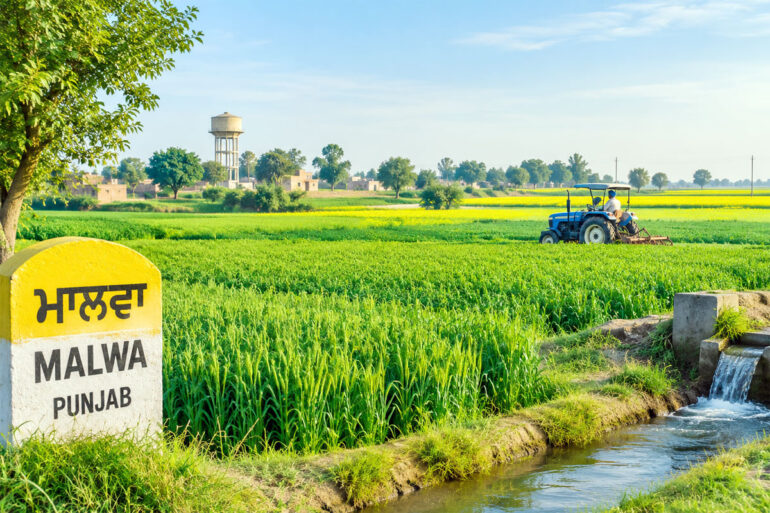
Meanwhile, the same pattern of “parachuting outsiders” has now collided with Punjab’s harsh electoral arithmetic. By replacing PPCC president Amarinder Singh Raja Warring—a Malwa leader from Gidderbaha—with Doaba’s Pargat Singh, the Congress high command has not only deepened the loyalists’ sense of betrayal but also risked weakening its grip on the very region that decides Punjab’s future. Malwa, with 68 of the state’s 117 Assembly seats, is the road to Chandigarh. Yet Congress today has zero MLAs there. To sideline a Malwa face at this moment is more than an organisational shuffle—it is a strategic gamble that could cost the party dearly. Notably, Punjab politics has always been, to a considerable extent, a politics of geography. The state may have only 117 Assembly constituencies but those seats are spread across three distinct political regions—Malwa, Majha and Doaba and each region carries its own political weight, social equations and electoral history.
A Leadership Change That Could Cost Congress Malwa
Congress high command’s decision to replace Warring with Pargat is more than a routine organisational change. It raises a fundamental political question: has the Congress, while attempting to resolve its internal factional problems, weakened its grip on the very region that holds the key to power in Punjab?
Why Malwa Holds the Key to Punjab’s Power
The numbers make the question impossible to ignore. Malwa accounts for 68 of Punjab’s 117 Assembly seats. Majha has 26, while Doaba has 23. To form a government, a party needs 59 seats—an absolute majority in the 117-member Assembly. The arithmetic is stark. Even if a party were to sweep both Majha and Doaba, the combined total would be only 49 seats—10 short of the majority mark. In other words, Malwa is not merely another region of Punjab. It is the region without which a party seeking to form a government faces an almost insurmountable numerical disadvantage.
From Two Seats to None: Congress Loses Its Malwa Foothold
The Congress entered the 2022 Assembly election in a difficult position and ultimately won only 18 seats across Punjab. But its position in Malwa was particularly revealing. Of the 68 Malwa constituencies, Congress managed to win only two—Gidderbaha and Abohar. The two victories were significant because they represented established political families and leaders with deep roots in the region. Warring retained Gidderbaha by a narrow margin, while Sandeep Jakhar won Abohar. But even those two remaining Congress footholds have subsequently disappeared. Warring’s elevation to the Lok Sabha from Ludhiana in 2024 meant that he had to vacate Gidderbaha, the constituency he had represented since 2012. Congress fielded his wife, Amrita Warring, in the ensuing by-election, but the party failed to retain the seat. The other Malwa seat, Abohar, being represented by Sandeep Jakhar, was suspended by the party over alleged anti-party activities. Consequently, the Congress’s already tiny presence in the 68-seat Malwa region has effectively been reduced to zero sitting MLAs. That is an extraordinary political reality for a party that aspires to return to power in Punjab. And then came the leadership change. It is against this backdrop that the decision to remove Warring from the PPCC presidency and appoint Pargat assumes much greater significance.
A Malwa Voice at the Helm—Just When Congress Needs One
Warring had headed the Punjab Congress since April 2022 and, despite the Congress’s overall electoral difficulties, had remained one of the party’s most visible young faces. In 2024, he successfully contested the Ludhiana Lok Sabha constituency. Warring was not merely a PPCC president. He was also a sitting Lok Sabha MP from Ludhiana, a city located in the heart of Malwa’s wider political geography. When Congress had zero MLAs in Malwa’s 68 constituencies, was this really the moment to move its state leadership away from a Malwa-based political face?
The Wrong Time to Replace Warring
Significantly, over the decades, Congress has repeatedly given the PPCC presidency to leaders whose principal political bases were in Malwa. Capt Amarinder Singh represented Patiala and became one of the most consequential Congress leaders in Punjab. Rajinder Kaur Bhattal was rooted in Lehra-Sangrur. Shamsher Singh Dullo came from Khanna. Sunil Jakhar represented the Abohar/Fazilka belt. And Warring built his political career in Gidderbaha and the wider Muktsar region.
A Doaba Leader at the Helm, Malwa Left Adrift
Even when the Congress chose leaders from other regions, the broader political strategy traditionally recognised that Malwa could not be ignored. But now, at a time when Congress has no sitting MLA in the entire 68-seat Malwa region, the party has chosen a state president whose electoral base is in the 23-seat Doaba region.
Without Malwa, Congress’s Road to Power Is Blocked
It is a fact that Malwa cannot be treated as a secondary theatre for the Congress. It is the principal battlefield. It contains nearly 58 per cent of Punjab’s Assembly constituencies. A party can perform well in Majha. It can make gains in Doaba. It can even emerge as the largest party in both regions. But without a meaningful breakthrough in Malwa, the road to Chandigarh remains blocked by arithmetic. And at present, the Congress enters that battle with zero sitting MLAs in Malwa. That should be the starting point for every strategic conversation within the Punjab Congress. The question, therefore, is not whether Pargat is capable of leading the party. The question is much more fundamental: Can the Congress afford to fight the 2027 Punjab Assembly election without making the revival of Malwa its overriding organisational priority? The answer, based purely on the numbers, appears obvious. And the party has just shifted its state presidency from a Malwa-based leader to a leader from Doaba. That may turn out to be a risky gamble. For a party that needs a minimum of 59 seats to govern Punjab, the road to Chandigarh still runs overwhelmingly through Malwa. And if the Congress has lost that road, changing the driver may not be enough. It first has to find the road back.