




Chandigarh, March 19
Union Minister of State (Independent Charge) for Science & Technology, Dr Jitendra Singh today laid the foundation stone of the first-ever dedicated BioFoundry Centre under the Department of Biotechnology at Chandigarh, with an outlay of about ₹42 crore over the next two years.
The facility is being established as a national platform for developing and scaling advanced biomanufacturing processes, particularly in agri-food biotechnology, including smart proteins, bio-inputs, and bio-based products. The Minister said this centre will help bridge laboratory research with industrial-scale applications and strengthen India’s bioeconomy.
Dr. Singh said that National Agri-Food and Biomanufacturing Institute (NABI) has emerged as a key institution in India’s biotechnology landscape, particularly in translating scientific research into solutions for agriculture, food, and nutrition. He said the institute’s work across genomics, microbial biotechnology, food science, and bioinformatics is directly contributing to nutritional security, sustainable agriculture, and value addition in agri-food systems.
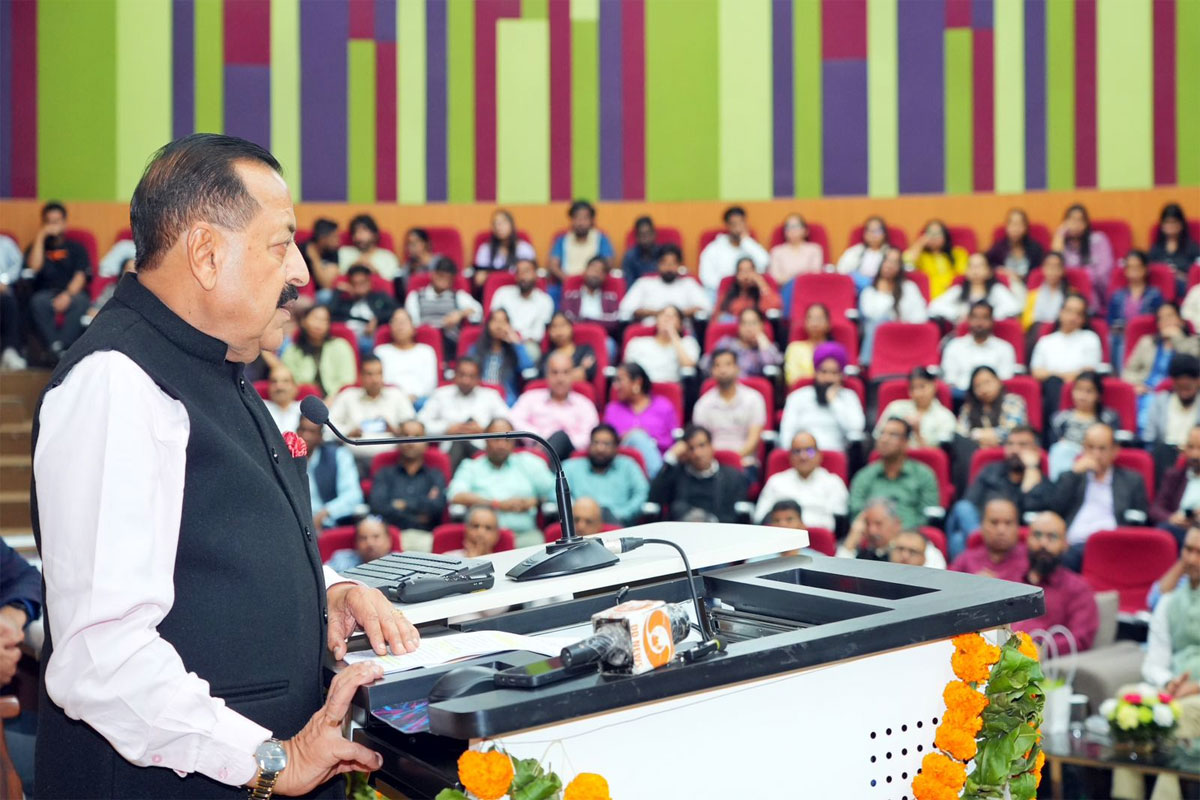
The Union Minister was addressing a gathering at the BRIC–National Agri-Food and Biomanufacturing Institute (NABI), Mohali, where he participated in multiple key events including the Biomanufacturing Workshop 4.0, “Smart Protein Forum 2026”, the foundation stone laying ceremony of the BioFoundry, and the BRIC-NABI Foundation Day celebrations. The event was attended by Prof. Rajesh S. Gokhale, Secretary, Department of Biotechnology and Director General, BRIC, along with leading scientists, researchers, industry representatives, and innovators from across the country.
Highlighting the importance of smart protein research, the Minister said that rising global protein demand and environmental concerns require alternative and sustainable solutions. He said smart proteins, developed through microbial fermentation, plant biotechnology and synthetic biology, offer a scalable and sustainable pathway for the future of food. He added that platforms like the Smart Protein Forum bring together science and industry to accelerate innovation in this emerging sector.
Dr. Singh said that India’s fast-growing bioeconomy is being supported by forward-looking policies such as BioE3- Biotechnology for Economy, Environment and Employment, which aim to promote sustainable growth, generate employment and boost innovation. He said technologies like synthetic biology and biomanufacturing are central to achieving these national objectives.
Referring to the BioFoundry being established at NABI, the Minister said it will house advanced infrastructure including large-scale fermenters, upstream and downstream processing systems, and high-throughput experimental platforms. He said the facility will support startups and industry through scale-up, pre-commercialisation and technology transfer, while also serving as a skill development hub for young professionals in biotechnology.
The Minister said NABI is building capabilities in areas such as de novo smart protein design, microbial platforms, and scalable production systems, creating a complete pipeline from research to real-world application. He added that such integrated efforts are essential for making India a global leader in biotechnology and biomanufacturing.
Dr. Singh emphasised that collaboration between academia, industry, startups and policymakers will be key to achieving breakthroughs in biotechnology. He said institutions like NABI, along with enabling infrastructure like the BioFoundry, are helping create a strong innovation ecosystem in the country. The Minister expressed confidence that these initiatives will accelerate innovation in food, nutrition, and agriculture, and contribute significantly to India’s vision of a Viksit Bharat driven by science and technology.