




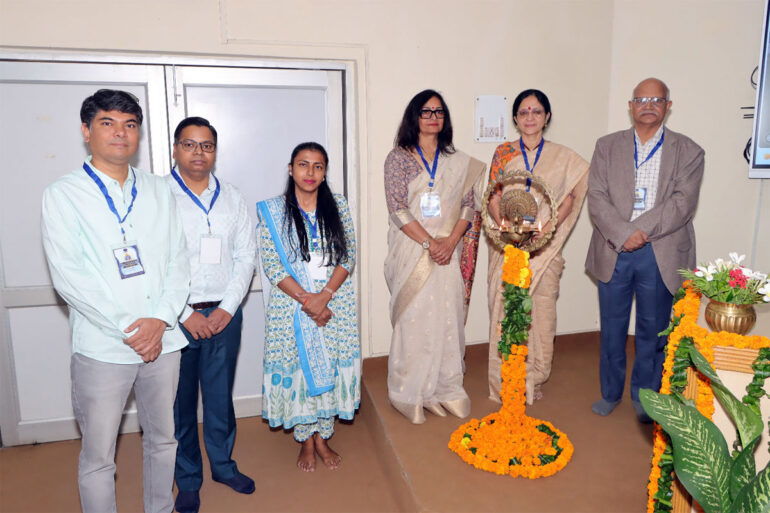
Mohali, October 26
The National Institute of Pharmaceutical Education and Research (NIPER), SAS Nagar (Mohali), Punjab, commenced a two-day conference on Artificial Intelligence in Ayurinformatics (AI²) on October 26, 2026. The conference brings together experts from diverse disciplines to explore the integration of artificial intelligence (AI), informatics, pharmaceutical sciences and traditional Ayurvedic knowledge for advancing drug discovery and healthcare.
Delivering the welcome address, Prof. Dulal Panda, Director, NIPER Mohali, underscored India’s unique position as a global centre of Ayurveda and the immense potential of AI to expand the scientific understanding, reach and market of traditional medicine. He highlighted how AI can generate deeper insights into the effects of Ayurvedic formulations on patients’ genomic and proteomic profiles, paving the way for more evidence-based and personalized therapeutic approaches. He also emphasized the need for larger, focused clinical trials to establish the efficacy and safety of Ayurvedic interventions. Prof. Panda stated that NIPER Mohali would strive to strengthen interdisciplinary collaborations and serve as a bridge between modern medical and Ayurvedic practitioners, facilitating the integration of both systems through AI-enabled research for improved patient outcomes. He expressed confidence that conferences such as AI² would foster meaningful collaborations and advance the field.
Dr. Rajendra Kumar, the conference organizer, introduced the focused roadmap of the conference, highlighting the transformative potential of AI in ayurinformatics. He emphasized NIPER Mohali’s role in bridging AI-driven drug discovery with traditional Ayurvedic knowledge through research on drug discovery for SARS-CoV-2 and Alzheimer’s disease, advanced molecular modelling, and the identification of multitarget mechanisms of action of herbal bioactives and formulations.
Prof. P. V. Bharatam highlighted the growing importance of informatics and artificial intelligence in modern drug discovery. He emphasized the need to integrate informatics, chemistry, biology and Ayurvedic knowledge to accelerate scientific discovery and develop innovative approaches to healthcare.
Dr. N. Srikanth, Deputy Director General, Central Council for Research in Ayurvedic Sciences (CCRAS), delivered the special address, emphasizing that the medicinal properties of hundreds of plant species have been established through research. He highlighted the importance of leveraging AI to enhance the value of existing traditional medicinal knowledge and Ayurveda, particularly in advancing biopharmaceutical-based drug discovery.
The keynote address was delivered by Prof. V. Sattigeri, Head, CSIR–Traditional Knowledge Digital Library (TKDL), discussed the challenges posed by inadequate formal intellectual property protection and the resulting risks of misappropriation of traditional knowledge. She emphasized the importance of timely intervention by the Indian government and the role of initiatives such as TKDL in safeguarding India’s rich heritage of traditional medicinal knowledge against inappropriate patent claims.
The two-day conference, being conducted in hybrid mode, features expert lectures and discussions on emerging opportunities at the intersection of artificial intelligence, pharmaceutical research and Ayurveda. The first day witnessed participation from 117 participants from across the country, reflecting the growing interest in interdisciplinary approaches to traditional medicine and AI-driven healthcare innovation.
The conference underscores a crucial opportunity for India to transform its rich Ayurvedic heritage into scientifically validated, data-driven and globally relevant healthcare solutions. By bringing together artificial intelligence, modern pharmaceutical research and traditional medical knowledge, NIPER Mohali aims to help bridge the gap between traditional wisdom and contemporary evidence-based medicine. The broader vision is to accelerate the discovery of safer and more effective therapeutics, strengthen the scientific validation of Ayurvedic formulations, protect India’s traditional knowledge, and foster collaborative research that translates the country’s medicinal heritage into meaningful benefits for patients worldwide.