




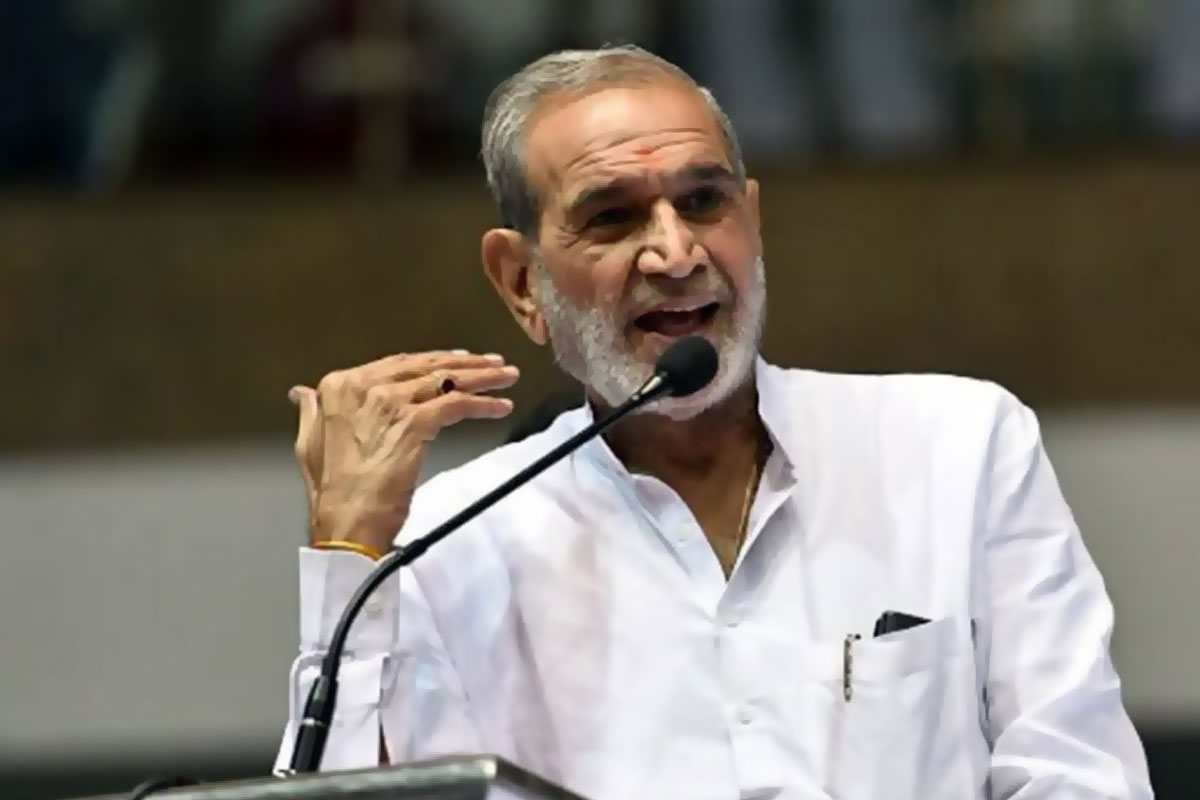
Convicted Congress leader Sajjan Kumar, who died in Tihar jail where he was undergoing life imprisonment on August 20, is likely to haunt the party at a crucial time in Punjab when the state is headed for crucial assembly elections less than six months from now. The lack of a clear stance on the part of the Congress, both at the national as well as the state level, is not going to do any good to the party either.
Congress silent as Hooda retracts “role model” remark
While the Rohtak MP Deepinder Singh Hooda’s remark describing Sajjan Kumar as a “role model”, which he later denied having said, was received with widespread anger and outrage across Punjab and other parts of the country, particularly among the Sikh community, the Congress did not make any attempt at damage control at the official level, except making him (Deepinder) to retract the statement and claim he was misquoted.
Sajjan Kumar, a key accused in the 1984 anti-Sikh riots
Kumar was one of the main culprits of the anti-Sikh Delhi riots in 1984, in which several thousand Sikhs were killed in the aftermath of the assassination of Prime Minister Indira Gandhi at the hands of her own Sikh bodyguards.
1984 riot accused rose through Congress ranks despite the taint
Congress already does not have a good track record about how it dealt with the culprits of the 1984 riots, including HKL Bhagat. Both Kumar and Bhagat were allotted party tickets after the riots and became MPs. Bhagat was also made a minister in the Union government. While Bhagat died a natural death, Kumar managed to dodge the law for a long time. He was eventually convicted during the BJP rule at the centre and sentenced to life imprisonment.
Congress leaders’ praise for Kumar rekindles Sikh community’s old wounds
As the Congress was already accused of shielding the culprits, the statements by some of the senior party leaders like Deepinder Hooda, his father and former Haryana Chief Minister Bhupinder Singh Hooda, Randeep Singh Surjewala, Pawan Khera and Udit Raj, all praising Kumar, have not gone well with the Sikh community and rightly so. After all, Kumar was found to be involved in the anti-Sikh riots and he was convicted and sentenced to life imprisonment for that. The Congress leaders should have exercised discretion and restraint while reacting to his death as it involved the sentiments of tens of thousands of people, including the family members of the riot victims.
Caste equations matter, but cannot override the stain of 1984
Kumar, despite his role in the anti-Sikh riots, was considered to be an “eminent” Jaat leader having influence in Delhi and pockets of Haryana. Under normal circumstances, it would have been natural for the Haryana politicians, particularly those belonging to the Jaat community, to grieve his death and praise him. For the Congress, the Jaat community is an important asset in Haryana. However, it is naïve to assume that Kumar’s supporters and fellow caste members would approve of what he was convicted and sentenced for. Caste polarization no doubt does prevail everywhere, including Haryana, but that does not mean it is the only factor when it comes to casting one’s vote in the state.
Haryana vote calculus may hurt Congress in Punjab
Whether the Congress leaders like Hooda’s, Khera’s and Surjewala’s tributes to Kumar will fetch any votes to the party in Haryana is not certain; what is certain is that these leaders glorifying him will definitely have an adverse impact in Punjab against the Congress. Parties opposed to the Congress, including the Aam Aadmi Party, the Bharatiya Janata Party and the Shiromani Akali Dal, have already made it an issue and it is unlikely to die down for some time. In the time to come, the Congress will need to take a clear position and officially distance itself from the statements of leaders who praised Kumar.
(The views expressed by the author are personal.)