




Dehradun, May 4
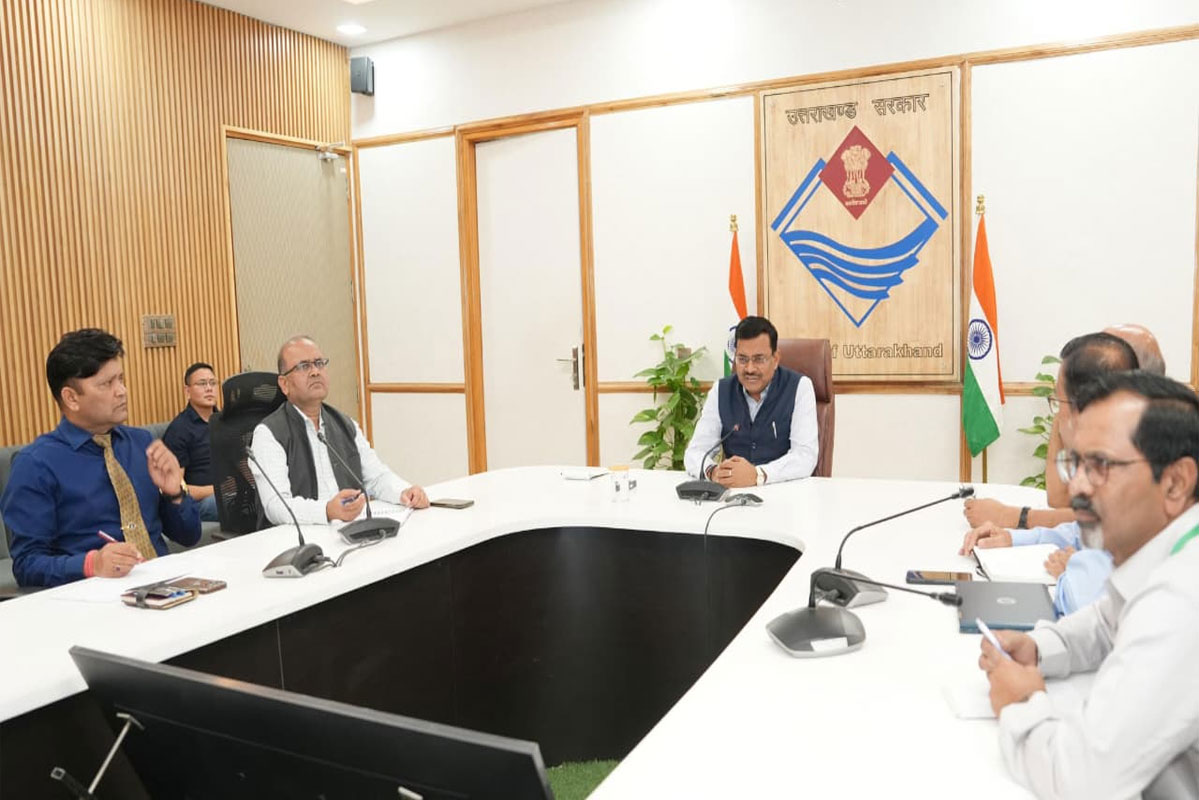
Chief Secretary Anand Bardhan on Monday chaired a detailed review at the Secretariat covering the Earthquake Early Warning System (EEWS), National Earthquake Risk Mitigation Programme, National Glacial Lake Outburst Flood (GLOF) Risk Mitigation Programme, and landslide reduction initiatives. He assessed the progress of ongoing projects and issued necessary directions to concerned departments and institutions.
Under the GLOF risk mitigation programme, the Uttarakhand State Disaster Management Authority and Wadia Institute of Himalayan Geology presented current progress and future plans. Disaster Management & Rehabilitation Secretary Vinod Kumar Suman informed that Vasundhara Lake is being developed as a pilot site, where state-of-the-art early warning systems and monitoring mechanisms will be installed. This model will later be replicated at other vulnerable glacial lakes to strengthen scientific and technical risk management across the state.
The Chief Secretary directed Wadia Institute to present a detailed timeline of proposed activities for 2026–27 and 2027–28, specifying milestones. He also instructed submission of a comprehensive mitigation plan, including early warning systems, real-time monitoring, decision support systems, and structural measures such as controlled water discharge and lowering of lake levels.
In a separate meeting, the Earthquake Early Warning System was reviewed. Secretary Suman reported that 169 sensors and 112 sirens have already been installed, with IIT Roorkee actively collaborating to strengthen the system. A key MoU was signed with IIT Roorkee on 26 February 2026, covering alert transmission, operation, and maintenance of EEWS from 1 January to 31 December 2026. Under the National Earthquake Risk Mitigation Programme, 500 strong motion sensors are being deployed in seismic zones to enhance the system. Additionally, installation of 526 sirens (500 indigenous EEWS sirens and 26 multi-hazard sirens) has been proposed.
Suman further noted that the National Centre for Seismology operates 167 seismological observatories nationwide, including 8 in Uttarakhand. Plans are underway to establish new permanent observatories at Roorkee, Devprayag, Karnaprayag, Ramnagar, Bageshwar, Almora, Kedarnath, and Chakrata. The Chief Secretary emphasized making the EEWS more effective, precise, and rapid, ensuring timely and widespread dissemination of alerts to the public. He stressed expansion and regular maintenance of sensor and siren networks.
In the third meeting, updates were shared on debris flow risk assessment. A total of 48 sensitive sites have been identified in Chamoli, Uttarkashi, and Pithoragarh districts, mainly along drainage channels. These sites have been categorized as high, medium, or low risk to prioritize interventions.