




Chandigarh, August 11
In a significant step to strengthen its fight against drug abuse and to promote mental wellbeing of the students, the Bhagwant Mann-led Punjab Government began an extensive teachers’ awareness and capacity-building programme across 12 districts under its flagship anti-drug campaign, ‘Yudh Nashean Virudh’, this past week.
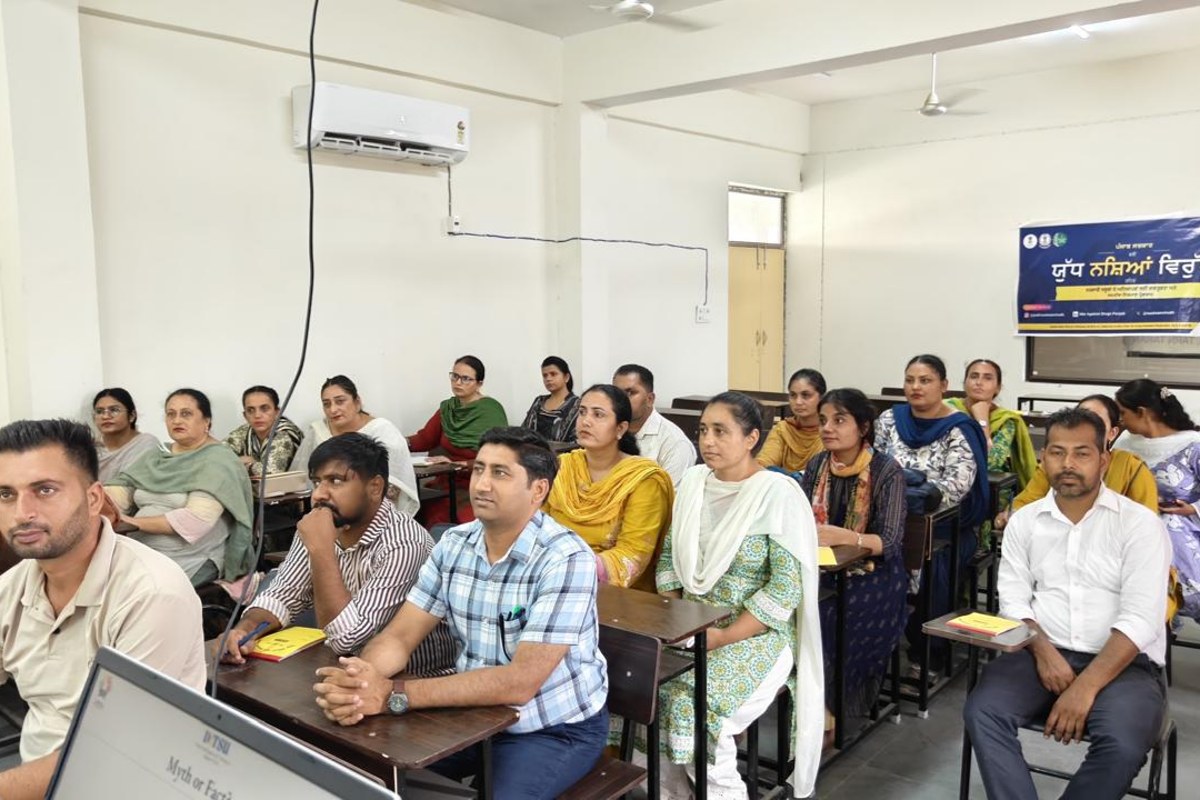
The objective of the initiative is to equip more than 21,850 teachers with the capacity and practical skills needed to identify early signs of mental health concerns and drug abuse among students and to intervene in time. The drive was kicked off in Fazilka and Tarn Taran on Monday, where over 800 teachers participated in the workshops last week.
The programme follows from the success of sensitisation programmes of the government in schools. Earlier in January this year, a training programme was carried out for Principals and Headmasters of Senior Secondary and High Schools across nine districts. The training focused on border districts of the state which are especially vulnerable to the menace of substance use.
Further, a pilot teacher training programme was conducted in Amritsar, in which more than 2,800 teachers participated. Over 75% of participants reported feeling inspired to contribute toward creating a healthier school environment. Based on the successes of these initiatives, the Bhagwant Mann government has now launched a phased expansion of the training module starting with Fazilka, Tarn Taran, Ferozepur, Gurdaspur, Pathankot, Sri Muktsar Sahib, Faridkot, Mohali, Ropar, Kapurthala, Ludhiana and Patiala.
Teachers are often the first to notice when a student is in distress, yet such behaviour is frequently mistaken for indiscipline rather than recognised as a health concern. With rising anxiety, stress and substance use among adolescents, school-based prevention offers a scalable and sustainable route to early identification and timely support. The teacher sensitisation builds on the sensitisation of Heads of Schools to institutionalise a whole-school approach to student wellbeing.
On this, Punjab Health and Family Welfare Minister Dr Balbir Singh said, “Every child who slips into the darkness of drugs is a child we could have reached earlier. Our teachers spend more time with our children than most; they notice the silences, the absences, the changes no one else sees. The training module is so designed that the teachers have a better idea of adolescent issues, their mental health and emotional wellbeing. The teachers would also be made aware of the risks associated with drug abuse. The training will enable them to provide support as and when necessary. They will learn to recognise the early signs of distress and drug vulnerability, to respond with compassion instead of punishment, and to connect struggling students to help before it is too late. No child in Punjab should suffer in silence or be met with stigma, and under the Yudh Nashean Virudh campaign, we are determined that they will be met with care and support.”
This is a massive cross-departmental undertaking, with the Directorate of State Council of Educational Research and Training (SCERT) ensuring implementation in conjunction with the Department of Social Security and Women and Child Development. The state’s Data Intelligence and Technical Support Unit (DITSU), which is leading a comprehensive response against substance use, will provide the implementation support, develop training material and ensure quality assurance throughout the campaign. Nodal Officers have been identified at the district level to ensure all senior secondary and high school teachers are able to participate in and benefit from the sessions. The sessions are being executed with the support of Nasha Mukt Bharat Abhiyan (NMBA) and National Action Plan for Drug Demand Reduction (NAPDDR).
The one-day awareness-cum-capacity-building sessions will be conducted in over 500 batches across the 12 districts in a phased manner starting from August 2026, and will be delivered by expert resource persons through a psychosocial lens to the issue of substance use. To ensure that the learnings translate into classroom practice, every teacher will take a pledge to be a sentry between their students and drugs and conduct activities with students in the weeks following the training. The programme’s reach and effectiveness will be tracked through participant feedback and a structured monitoring framework.