




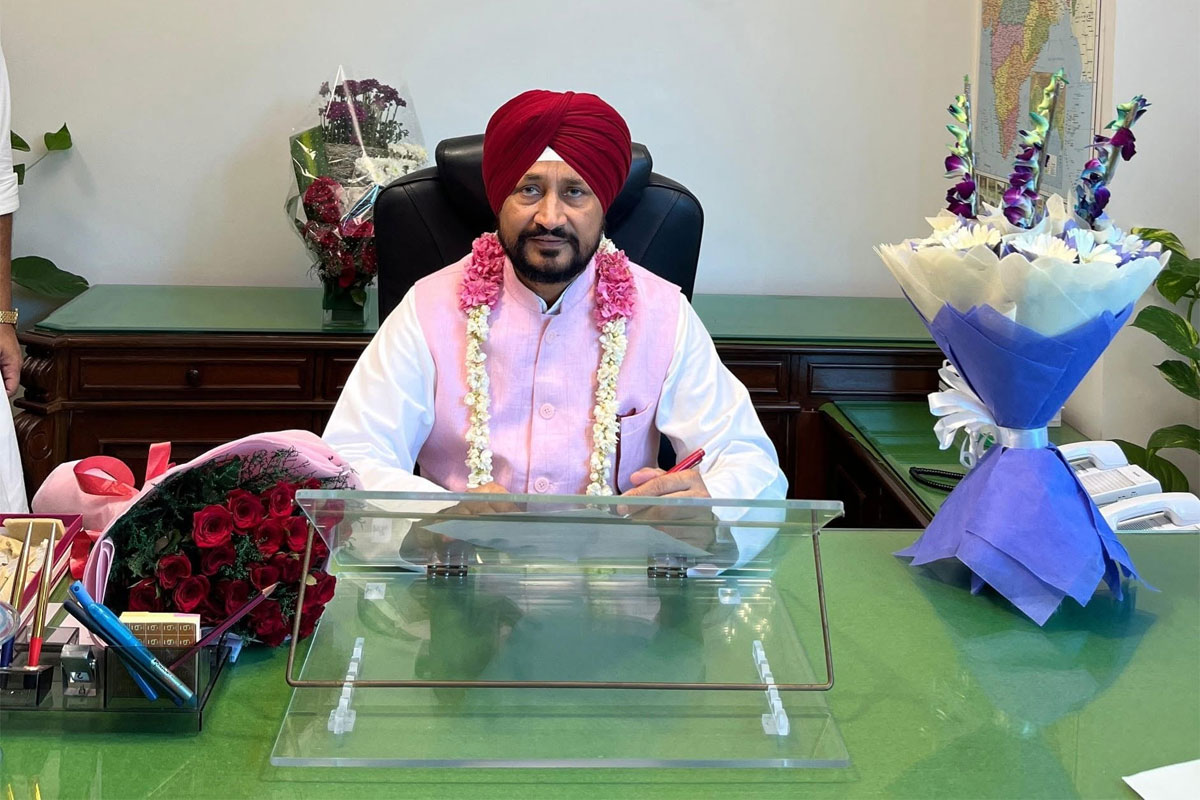
New Delhi, July 1
Newly appointed Chairperson of the Campaign Committee, Charanjit Singh Channi, occupies a unique place in the state’s political history as its first Dalit leader to hold the top post of the Punjab Chief Minister. Born on 15 March 1963, Channi rose from modest beginnings to become a significant figure in the Congress party. His early education was completed locally, after which he pursued higher studies, earning degrees in law and business administration. He later obtained a PhD in political science, reflecting his academic bent alongside his political career.
A Journey Shaped by Grassroots Connect
Channi’s political journey began at the grassroots level. He served as president of the municipal council in Kharar before entering the Punjab Legislative Assembly. He was first elected MLA from Chamkaur Sahib in 2007, a constituency he went on to represent for three consecutive terms. His rise within the Congress was steady, marked by his ability to connect with ordinary workers and his reputation as a leader who understood the aspirations of marginalized communities. He held various positions in the party, including membership in the Punjab Pradesh Congress Committee (PPCC) and leadership roles in the Vidhan Sabha, where he served as Leader of Opposition from December 2015 to November 2016.
The Leap That Made History
In 2017, Channi was inducted into Captain Amarinder Singh’s cabinet as Minister of Technical Education and Industrial Training. His tenure was noted for efforts to modernize technical institutes and expand opportunities for youth. However, his most dramatic political elevation came in September 2021, when the Congress high command removed Amarinder Singh as Chief Minister and appointed Channi as his successor. This decision was historic, as Channi became Punjab’s first Dalit Chief Minister, a move seen as both a social justice milestone and a political experiment aimed at broadening the party’s appeal among Scheduled Castes, who form a significant portion of Punjab’s population.
The Trials of Brief Chief Ministership
Channi’s brief tenure as Chief Minister, lasting until March 2022, was marked by attempts to project a pro-people image. He announced reductions in electricity tariffs, waived arrears for water bills, and sought to position himself as a common man’s leader. His style was often contrasted with Amarinder Singh’s more aristocratic persona, and he was portrayed as accessible and grounded. Yet, his government faced challenges, including factionalism within the Congress, the rise of the Aam Aadmi Party, and controversies over sand mining allegations involving his relatives.
From Historic Rise to Electoral Rout
The 2022 Punjab Assembly elections proved a turning point. Despite Channi being projected as the Congress’s chief ministerial face, the party collapsed to just 18 seats, while AAP swept to power with 92 seats. Channi himself lost from both Chamkaur Sahib and Bhadaur constituencies, a setback that underscored the limits of the Congress’s strategy. What was intended as a bold experiment in leadership and social justice turned into one of the party’s worst electoral debacles in Punjab.
From Setback to Revival
After the defeat, Channi remained active in Congress politics. In 2024, he successfully contested the Lok Sabha elections from Jalandhar, returning to Parliament and re-establishing his relevance. He was also inducted into the Congress Working Committee, signaling the party’s continued reliance on him as a Dalit face in Punjab. His trajectory reflects resilience: from municipal politics to MLA, minister, Chief Minister, and now MP, Channi has consistently reinvented himself despite setbacks.
Still Central to Punjab’s Political Narrative
Channi’s political significance lies in his symbolic role as Punjab’s first Dalit Chief Minister and his ability to represent marginalized voices within the Congress. His tenure highlighted both the opportunities and risks of identity-based leadership experiments in Indian politics. While his elevation was celebrated as a breakthrough, the subsequent electoral collapse revealed the complexities of translating symbolic gestures into sustained political gains. Today, as a Lok Sabha MP and member of the Congress Working Committee, Channi continues to be a key figure in Punjab’s political narrative, embodying both the aspirations of Dalit representation and the challenges of Congress’s revival in the state.