




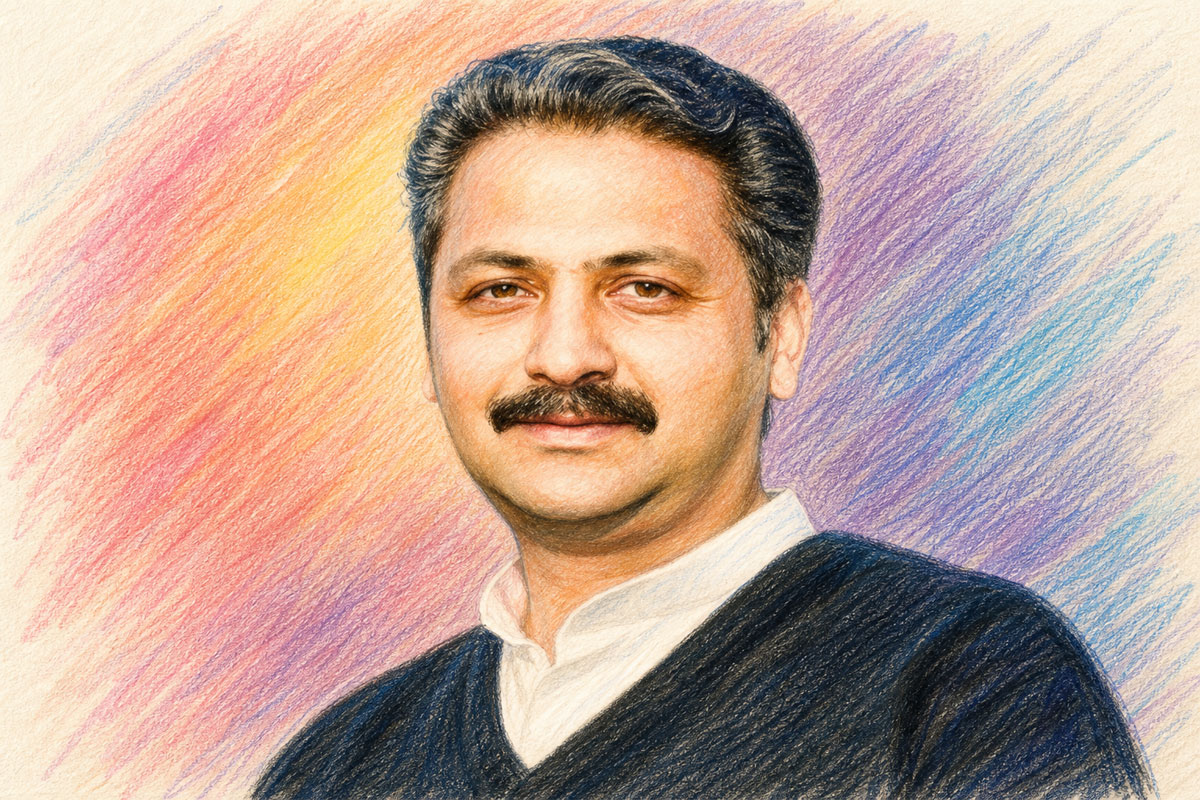
New Delhi, July 1
Vijay Inder Singla, the newly appointed Chairperson of Election Management & Coordination Committee for the upcoming Punjab Assembly Elections is among the prominent second-generation Congress leaders from Punjab who have successfully combined grassroots organisational work with high-level party responsibilities. Over the years, his political journey has traversed the Youth Congress, Parliament, the Punjab Cabinet and the All India Congress Committee (AICC), making him experienced organisational leaders in the party.
Early Life, Family Legacy and Education
Born on December 1, 1971, Singla belongs to a politically influential family. He is the son of late Sant Ram Singla, a former Congress parliamentarian and minister in Punjab. Following his father’s demise, Singla gradually inherited the family’s political legacy and Congress network across the Malwa belt. Academically, he studied at Yadavindra Public School, Patiala, pursued higher education at Multani Mal Modi College and later earned a degree in Computer Science Engineering from B.M.S. College of Engineering, Bengaluru.
Rise Through the Youth Congress Ranks
Unlike many leaders who enter politics directly through family influence, Singla spent considerable time building his credentials within the Youth Congress organisation. His rise through the party ranks began with his appointment as General Secretary of the Punjab Youth Congress between 2002 and 2004. He later served as Vice-President of the organisation before being appointed Chairman of the Punjab Energy Development Authority (PEDA) in 2005. His organisational abilities earned him the position of President of the Punjab Youth Congress from 2006 to 2008. During this period, he became closely associated with the organisational reforms introduced by Rahul Gandhi in the Youth Congress. Singla subsequently served on the Indian Youth Congress Election Commission, which supervised internal organisational elections across the country.
From Youth Leader to Member of Parliament
Singla’s biggest political breakthrough came in the 2009 Lok Sabha elections when he won the Sangrur parliamentary seat by defeating senior Shiromani Akali Dal leader Sukhdev Singh Dhindsa. The victory elevated him as one of the leading Congress faces in Punjab’s politically significant Malwa region. During his tenure as Member of Parliament from 2009 to 2014, he focused on development-related initiatives involving rail connectivity, healthcare infrastructure, sports facilities and projects funded through the MPLAD scheme. Among the major initiatives associated with his parliamentary tenure was the proposal for establishing a PGI satellite centre in Sangrur.
From Electoral Setback to Cabinet Minister
The emergence of the Aam Aadmi Party as a major political force in Punjab dealt a severe blow to Singla’s parliamentary career. In the 2014 Lok Sabha elections, he lost the Sangrur seat to Bhagwant Mann. The defeat reflected both the growing popularity of AAP and the declining fortunes of the Congress in Punjab at the time. However, Singla staged a strong comeback in the 2017 Punjab Assembly elections by winning the Sangrur Assembly constituency. Following the formation of the Congress government under Captain Amarinder Singh, he was inducted into the state Cabinet and was entrusted with key portfolios, including Public Works Department (PWD) and Administrative Reforms. During his tenure, he was regarded as one of the younger faces of the government and maintained close access to the Congress high command in New Delhi.
From Cabinet Minister to Consecutive Defeats
The Congress debacle in the 2022 Punjab Assembly elections once again affected Singla’s political fortunes. He lost the Sangrur Assembly seat to AAP candidate Narinder Kaur Bharaj amid the massive electoral wave that brought Bhagwant Mann to power as Chief Minister. His electoral struggles continued in 2024 when he unsuccessfully contested the Lok Sabha elections from Anandpur Sahib.
Retaining Relevance Within the Party
Despite electoral reverses, Singla’s importance within the Congress organisation remained intact. Over the years, he has served in several key national positions, including Congress national spokesperson, AICC secretary and Joint Treasurer of the AICC. He has also been entrusted with responsibilities relating to party assets and organisational management.