




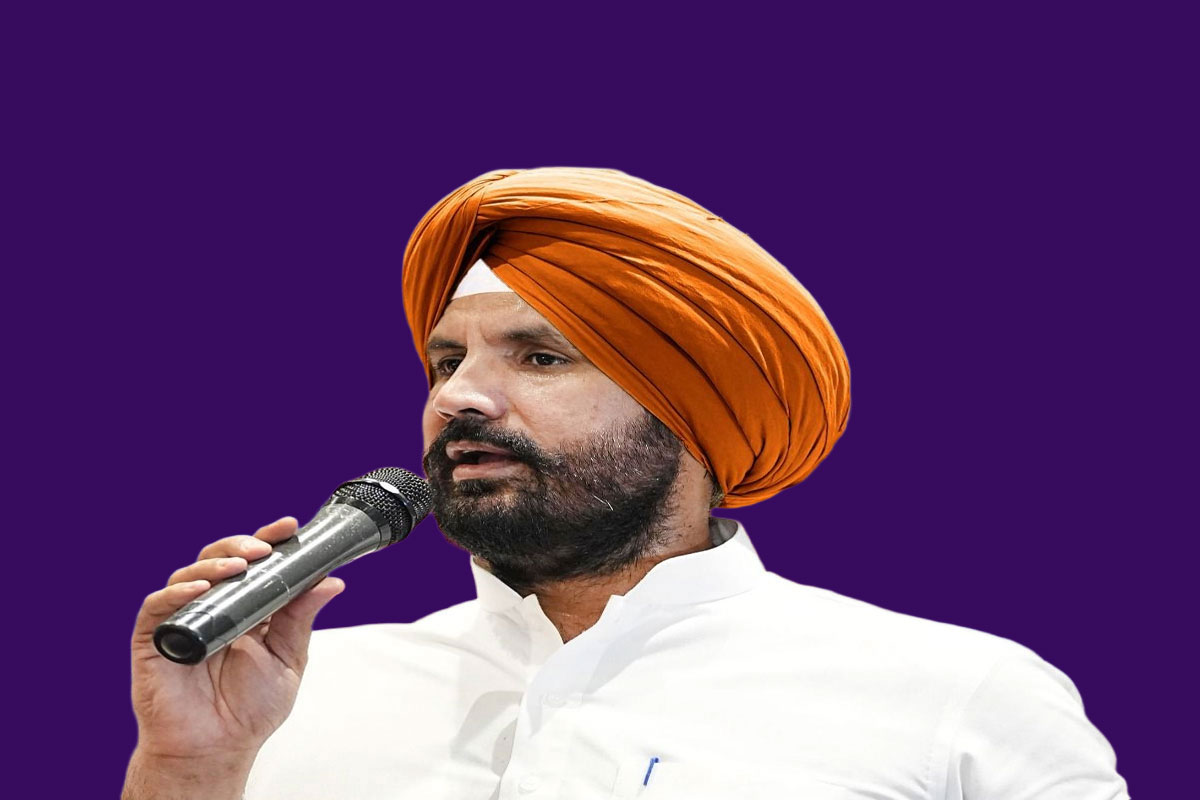
It may sound strange, but it is true that the Congress high command appears to be playing mind games with its own leadership in Punjab. With the crucial Punjab assembly elections just a little over six months away, if these are not advanced, the party is still undecided about the leadership issue in the state. Earlier, on a few occasions, the party high command had ruled out any change in the leadership. But now, for about a month, there have been enough hints that the state Congress was headed for a change of guard.
Another Name in the Race
The party has circulated the names of quite a few “probable” candidates so far. First, it was Vijay Inder Singla, then for a while Rana KP Singh, followed by Sukhjinder Singh Randhawa and Pargat Singh. The latest name being circulated is that of Charanjit Singh Channi, a former Chief Minister and sitting MP from Jalandhar.
Leading Under Pressure
The incumbent president, Amarinder Singh Raja Warring, has done reasonably well against all odds. Given the way the Aam Aadmi Party has run the government, it has left little scope and space for the opposition party, as all instruments of state machinery and even non-state players remained under firm control of the government. They continue even now, when the government is at the fag end of its term.
Warring’s Biggest Achievement
Yet Warring managed to do well. His best test was the 2024 General Elections, in which he led the party to an impressive performance, winning 7 of the 13 parliamentary constituencies. The ruling AAP came second with just 3 seats. One of the seats was won by the Akalis and two by independents.
Battle Within the Congress
Like in the government, so in a political party, four years of tenure as Punjab Pradesh Congress Committee (PPCC) president must have led to some sort of “anti-incumbency”, but it is not really perceptible. Yes, the Chief Ministerial aspirants of the party want him replaced before the elections, so that he does not have any edge over the Chief Ministerial claims if and when the Congress wins the state elections under his leadership. That explains the reason for a sustained campaign to get him removed.
The High Command’s Dilemma
Since there appeared to be a “consensus” among Warring’s rivals that he “must be removed”, irrespective of who is appointed, the party high command appears to be seriously considering the change. But the change will be fraught with its own risks. For every “appointment” there are multiple “disappointments”. In Punjab, the Congress has a traditional history of factionalism among the senior leaders, who deem themselves to be the Chief Ministerial candidates, ahead of the elections. The more the chances of government formation, the more intense the rivalry. They try to run each other down. The same thing appears to be happening right now. As the “rebel” leaders are bent upon the change of guard, the high command is in a fix as to how to balance the caste and religious equations.
Lessons from the 2022 Punjab Assembly Elections
In Punjab, caste or religion does not play a dominant role as it does in the states of Uttar Pradesh and Bihar. But a perception has been built up that the dominant Jatt Sikh community would not like to part with the power. Irrespective of which party holds the power, the Jatt community “must” have a dominant role. The 2022 disaster Congress met with, particularly in the Malwa region, is attributed to a “non-Jatt”, Charanjit Singh Channi, having been appointed the Chief Minister before the elections and obviously the Chief Ministerial candidate for the next term.
The Region That Decided
The Congress was routed in the dominant Malwa region, where it could win just one out of 69 assembly segments in 2022. Amarinder Singh Raja Warring won from Gidderbaha by a close margin. It was swept by the AAP as it won 67 seats from this region. The second seat in the region of Dakha was won by Manpreet Singh Ayali of the Shiromani Akali Dal. He has since left the party.
Congress’ Doaba Cushion
Channi’s appointment as Chief Minister, however, did help the Congress to retain some seats in the Dalit-dominated Doaba region. Punjab has the maximum concentration of the Dalit population at 31.91 per cent. But this is not homogeneous and it does not vote uniformly. While traditionally most of the Dalits have voted for the Congress, in the 2022 assembly elections, they mostly voted for the AAP.
Time for a Decision
The Congress high command’s dilemma is understandable. If it appoints Channi as the PPCC president, it again risks a 2022 debacle in the Jatt-dominated Malwa region and in case it appoints a non-Dalit, it risks losing a substantial chunk of the Dalit votes. That probably explains the confusion in Congress. Whatever way the party has to decide, it must decide at the earliest and set the leadership ambiguity and uncertainty at rest. The sooner it does, the better it will be for the party.
(Views expressed are personal.)